Turn attention into pipeline with Demand Gen
Reach buyers before they search and stay top-of-mind across YouTube, Shorts, Discover, and Gmail.
Share this Article



Key takeaways
Demand Gen creates demand on YouTube before users actively search.
B2B SaaS uses Demand Gen as top funnel pipeline creation engine.
YouTube Shorts outperform polished ads, driving higher conversions at lower costs.
Demand Gen and Search together create full funnel demand capture system.
AI targeting expands audiences but requires strong conversion signals for accuracy.
Demand Gen campaigns are Google's AI-powered ad format that runs across YouTube, YouTube Shorts, Discover, and Gmail. They replaced Video Action Campaigns in 2025 and are now the only way to run YouTube ads built for conversions.
For B2B SaaS, Demand Gen sits at the top of the funnel. It puts your brand in front of buyers before they ever type a search query into Google, so when they do search, they already know who you are.
Most agencies are still running Demand Gen like it is an e-commerce channel. That is the wrong playbook for B2B.
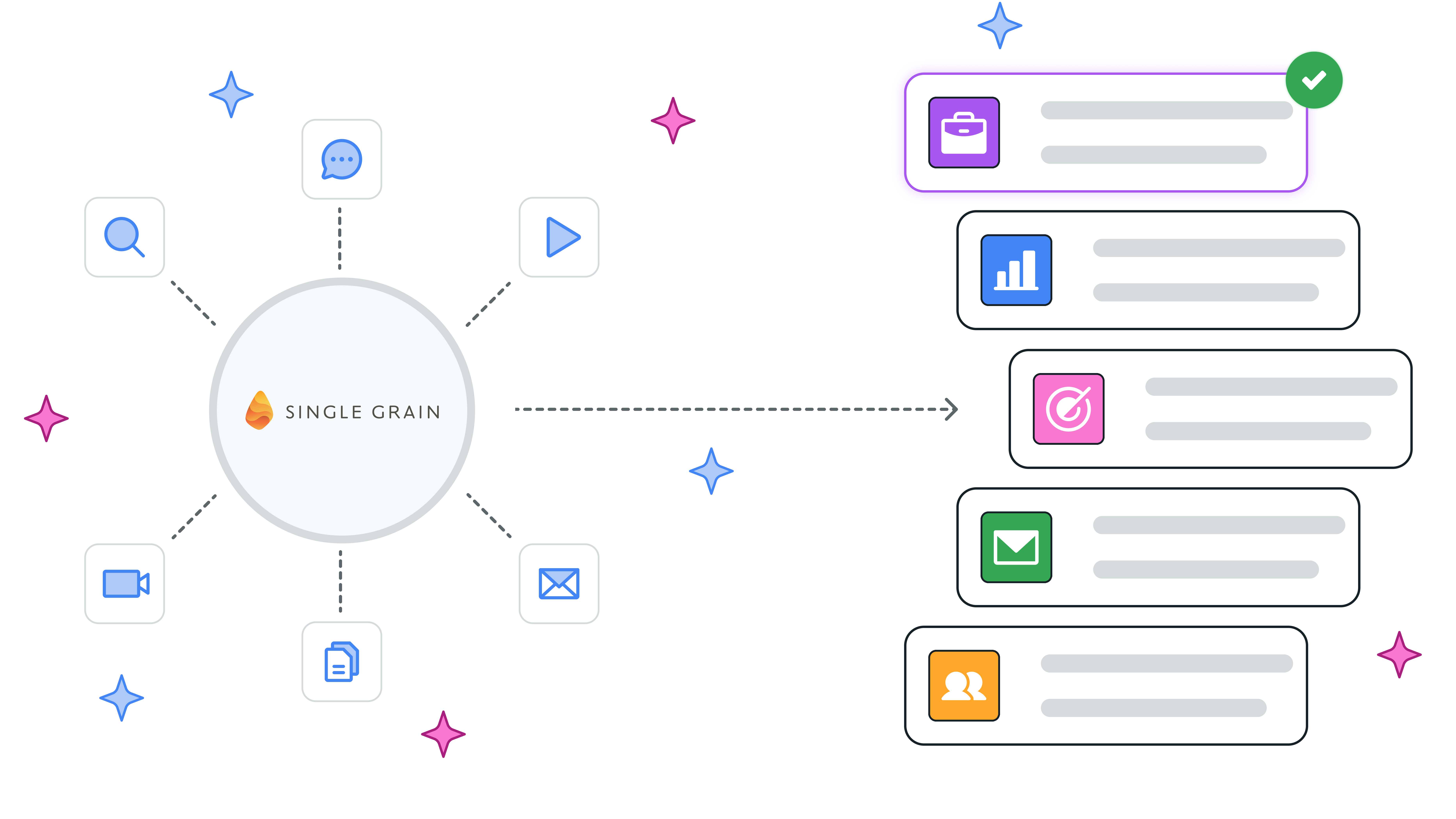
At Scalix, we run Demand Gen as a demand creation engine that feeds straight into our Google Search capture system. The result is shorter sales cycles and warmer demos.
This guide will walk you through what Demand Gen is, how it works with YouTube ads, how it compares to Performance Max, and the strategy that actually drives pipeline in 2026.
What Are Demand Gen Campaigns?

Demand Gen campaigns are Google Ads campaigns that show video and image ads across YouTube, YouTube Shorts, Discover, and Gmail. They use Google AI to find people who are likely to convert, even when those people are not searching for your product yet.
Think of it this way: Google Search Ads catch demand that already exists. Demand Gen creates the demand in the first place. It reaches people while they watch YouTube videos, scroll through Discover feeds on their phone, or check Gmail. That is roughly 3 billion users every month across these surfaces.
Google launched Demand Gen in late 2023 to replace the old Discovery Ads format. In April 2025, Google stopped letting advertisers create new Video Action Campaigns.
By September 2025, all existing ones were upgraded to Demand Gen. So if you want to run YouTube ads for conversions today, Demand Gen is the only option.
How Are Demand Gen Campaigns Different From Performance Max?
Demand Gen focuses on awareness and consideration on YouTube, Shorts, Discover, and Gmail. Performance Max runs across every Google surface, including Search, Shopping, Display, YouTube, and Maps, and is built for bottom-of-funnel conversion. They look similar, but they solve different problems.
Most B2B SaaS founders we talk to are confused about which one to pick. The short answer is that Performance Max works well for e-commerce because of the heavy Shopping placement.
For B2B SaaS, Performance Max often wastes budget on irrelevant Display impressions. Demand Gen is more controllable, more visual, and gives you the YouTube reach that B2B buyers actually consume.
Here is a clean side-by-side comparison.
[table]
Feature | Demand Gen | Performance Max
Best for | Awareness and consideration | Bottom-funnel conversion
Placements | YouTube, Shorts, Discover, Gmail | All Google properties
Format focus | Video and image | All formats, including Search and Shopping
Control over creative | High, including A/B testing | Low, fully AI-driven
B2B SaaS fit | Strong for demand creation | Weak for non-ecommerce
Audience signals | Lookalikes, custom segments, retargeting | First-party data and signals
[/table]
See our guide on how to run Google Ads for SaaS for a deeper understanding of Google formats for B2B SaaS.
What Replaced Video Action Campaigns on YouTube?
Demand Gen replaced Video Action Campaigns in 2025. Google forced the upgrade because Nielsen data showed Demand Gen delivers around 58% higher return on ad spend than the old format.
If you were running YouTube ads for leads or demos before September 2025, your campaign has already been migrated.
The change matters because Demand Gen unlocks new placements that Video Action Campaigns never had.
You now reach users on YouTube Shorts, Discover, and Gmail from a single campaign. You also get access to product feeds, lookalike segments, and AI optimization that the old format could not run.
For most B2B SaaS teams, the migration is good news. You get more reach, more formats, and better AI bidding.
The bad news is that the playbook is different. The creative that worked in Video Action Campaigns often falls flat in Demand Gen because the placement mix has changed. Short-form vertical video now matters more than long-form skippable ads.
How Do YouTube Ads Work Inside Demand Gen?
Inside Demand Gen, YouTube ads run as in-stream video, in-feed video, and Shorts.
The system uses Google AI to pick the best placement for each user based on what they watch, search, and click. You upload your videos and images, set a goal like demos booked or sign-ups, and the AI handles the rest.
The shift toward Shorts is the big story in 2026. YouTube Shorts now gets more than 70 billion daily views. Google reports that creator partnership campaigns on Shorts deliver a 30% lift in conversions while keeping CPA flat.
For B2B SaaS, this means short, founder-led, vertical videos shot on a phone often outperform polished horizontal ads produced by an agency.
This is the part most B2B SaaS teams get wrong. They build a 60-second hero video, run it across every placement, and wonder why CPA is high. The right approach is to build a creative library with at least 5 to 10 assets in different formats and lengths, then let the AI pick winners.
What Is the Best Demand Gen Strategy in 2026?
The best Demand Gen strategy in 2026 is to use it as the top of your funnel and feed the demand into Google Search Ads at the bottom. Run Demand Gen to create awareness with your ideal buyer, then let Search Ads catch them when they finally type your category into Google.
This is the model we built Scalix around. I spent nine years inside Google, and the single most important lesson from that time is that Google is one channel with two jobs. Demand Gen plants the seed. Search picks the fruit. Running one without the other leaves money on the table.
A few rules we follow on every Demand Gen account.
- Build at least three audience segments. Use one lookalike from your customer list, one custom segment built from competitor keywords, and one retargeting segment from your website visitors. Google's AI gets better when it has signals to work with.
- Use a creative library, not a single hero. We run at least 5 video assets and 5 image assets per campaign. The AI rotates them based on which one converts for which audience.
- Measure pipeline, not clicks. Demos booked, and SQLs are the only numbers that matter. Click-through rate is a vanity metric that bears little relationship to revenue.
Read our guide on the strategies that actually move conversion rate for more on creative testing.
How Does Demand Gen Work for B2B SaaS?
Demand Gen works for B2B SaaS by reaching the buying committee on YouTube and Discover before they start searching.
Around 95% of your total addressable market is not actively searching for your product right now. Demand Gen lets you reach that 95% so that when they do search, your brand is already familiar.
The reason B2B teams have ignored YouTube for years is that they thought it was a brand awareness channel with no measurable return. That was true in 2018. It is not true now.
Demand Gen delivers around 58% lower CPMs than LinkedIn for similar audience targeting, and the AI optimization means you can actually measure pipeline impact within 60 to 90 days.
We pair Demand Gen with LinkedIn Ads on most B2B SaaS accounts.
LinkedIn gives us the precise firmographic targeting (job title, company size, industry). Demand Gen gives us the cheap reach to keep the brand top of mind across the entire buying committee. Together, they cost less than running LinkedIn alone and reach more of the right people.
If you want to see how this plays out in a real account, look at how we ran the Google Ads strategy for Arini, the AI dental receptionist that went from a handful of demos to 17 closed clients and 70% revenue growth in three months.
What Are the Best Creatives for Demand Gen?
- The best Demand Gen creatives are short, vertical, and human.
- Videos under 15 seconds with a clear hook in the first 2 seconds drive the highest watch-through rate.
- Static images that look like organic content perform better than polished banner ads.
- The Demand Gen algorithm rewards creatives that fit the placement, not creatives that fit a brand book.
Here is the creative mix we run on most B2B SaaS Demand Gen campaigns.
[table]
Asset Type | Length | Best For | Hook Style
Founder talking head | 6 to 15 seconds | YouTube Shorts and Discover | Direct address, specific pain
Product demo screen recording | 10 to 20 seconds | In-feed and Shorts | Show the result in 3 seconds
Customer testimonial | 15 to 30 seconds | In-stream skippable | Quote in the first frame
Static carousel | N/A | Discover and Gmail | Bold headline plus product screenshot
Animated UI walkthrough | 6 to 10 seconds | Shorts | Fast cuts, one feature per cut
[/table]
Google rolled out Veo, its AI video generation tool, inside Demand Gen earlier this year. It can spin a single static image into multiple video variations, which is useful when you do not have a production budget.
We still recommend at least one real founder-led video per campaign. AI generation is great for volume, but humans still convert better than avatars.
How Does AI Power Demand Gen Targeting in 2026?
Google AI powers Demand Gen targeting through Optimized Targeting and the new AI Signals system.
Optimized Targeting allows Google Ads to expand beyond manually selected audiences and find additional users likely to convert using real-time signals and machine learning, helping improve campaign performance and reach.
The bigger change is what happened to Lookalike segments.
As of March 2026, Google retired the strict similarity thresholds that once controlled how close a Lookalike audience had to match your seed list. The system now uses your seed list as a signal and allows Google AI to prioritize conversions over similarity.
For most advertisers, this is a quiet loss of control. You can no longer say, "show this ad only to people who look exactly like my best customers." Google will widen the net if it thinks the wider net converts.
For B2B SaaS, this matters because our buyer profile is narrow and the AI tends to drift toward easier conversions like free trial sign-ups instead of qualified demos.
The fix is to feed the AI better conversion signals. We push down-funnel events (closed-won deals, SQLs, MQLs) into Google Ads through offline conversion imports. This teaches the AI that a closed deal is worth 100 times more than a sign-up, and the targeting tightens up fast.
YouTube Ads vs Demand Gen: Which Should B2B SaaS Pick?
There is no choice anymore. Demand Gen is the only way to run YouTube ads for conversions in 2026.
Video Action Campaigns were retired in 2025, and standalone YouTube ads now only exist as brand awareness or reach formats. If your goal is demos, sign-ups, or pipeline, Demand Gen is the format.
The real question is whether to pair Demand Gen with LinkedIn Ads, Google Search Ads, or both. Our answer for B2B SaaS is both.
Let LinkedIn handle precise account targeting. Demand Gen can handle cheap reach across the buying committee. Search can handle intent capture when the buyer is ready. That is the full funnel.
For a deeper comparison of paid social options, see our breakdown of Google Ads vs Meta Ads for B2B.
How Scalix Runs Demand Gen Differently
Most agencies plug into Demand Gen with an e-commerce mindset and run it like a Shopping campaign. We do not. I spent 9 years inside Google and built the Scalix Demand Gen playbook specifically for the B2B SaaS pipeline.
Three things we do that most agencies do not.
- We feed offline conversions into Demand Gen from day one. The AI optimizes for whatever you tell it to optimize for. Tell it to optimize for closed-won revenue, and the targeting transforms.
- We tie Demand Gen to Search through a single audience structure. The user who saw your Demand Gen ad and then searched for your category gets a different Search bid than the cold searcher. This is invisible to most agencies because they run Demand Gen and Search as separate accounts.
- We build creative briefs against the ICP, not the brand. Every video has a hook written for a specific job title and a specific pain. Generic SaaS creative does not work on Demand Gen because the algorithm rewards relevance.
If you want to see whether this would work on your account, read our guide on how to evaluate a Google Ads agency and ask any agency you are considering the same 9 questions.
Ready to Run Demand Gen the Right Way?
If you are spending on YouTube ads and not seeing a pipeline, the channel is not the problem. The setup is.
Demand Gen is a powerful platform in the right hands. Scalix is run by me, an ex-Googler who knows where the leverage points are because I spent 9 years inside the company that built it.
Book a free Google Ads audit, and we will tell you in 30 minutes whether your current Demand Gen setup is leaving pipeline on the table.