Before You Increase Budget, Audit the Setup
Most LinkedIn performance problems come down to targeting, messaging, attribution, or campaign structure. We'll show you where the gaps are.
Share this Article


Key takeaways
LinkedIn Ads are a demand creation channel, not a lead capture channel, and the strategy has to reflect that.
Most B2B SaaS companies waste 40% of their LinkedIn budget on bad targeting that looks reasonable on the surface.
Thought leader ads consistently outperform sponsored content by 2 to 3x because they actually look like LinkedIn, not advertising.
A LinkedIn campaign needs at least $4K per month in spend before it generates enough data to optimize against.
LinkedIn attribution has to be measured at the company level, not the lead level, or the pipeline disappears in the reporting.
LinkedIn Ads for B2B SaaS only work when they are actually treated like a system, not just a place to run ads.
Most B2B SaaS companies are not really running LinkedIn Ads. They are putting money into the platform, launching a few campaigns, and then waiting for leads to show up. When nothing meaningful happens, they assume LinkedIn does not work for them.
But that is usually not what is going wrong.
The issue is that LinkedIn Ads for B2B is not a quick lead channel. It is a demand creation channel. It is what gets your product in front of the right people before they are actively looking, before they are comparing tools, and often before they even understand the problem clearly themselves.
When it is set up properly, it changes how your entire pipeline behaves. Other channels start converting better because the audience has already seen you somewhere before.
If you have been running LinkedIn Ads for six months and your pipeline has not really moved, that usually says more about the setup than the platform. Targeting, messaging, offer, and how you are judging success all matter more than most people realize.
This guide breaks down what actually works in 2026, what does not, and how to think about LinkedIn Ads so they lead to pipeline.
Do LinkedIn Ads Work for B2B?
LinkedIn Ads work for B2B when you stop expecting them to behave like a direct response channel. They are not built to give you predictable signups the same week you launch a campaign. That expectation is where most setups break.
The issue is not attention. Your buyers are on LinkedIn. The issue is timing. Let me explain this to you clearly.
Most people are not there to make decisions. They are between work, reading updates, or seeing what others in their space are talking about. In that moment, a hard conversion message like “Book a demo” rarely lands because there is no active intent to act.
What does work is showing up earlier with the right context. Not hype. Not awareness for the sake of it. But content that helps a buyer recognize a problem they already deal with but have not yet fully named. That is what puts you into consideration before they ever start actively searching for a solution.
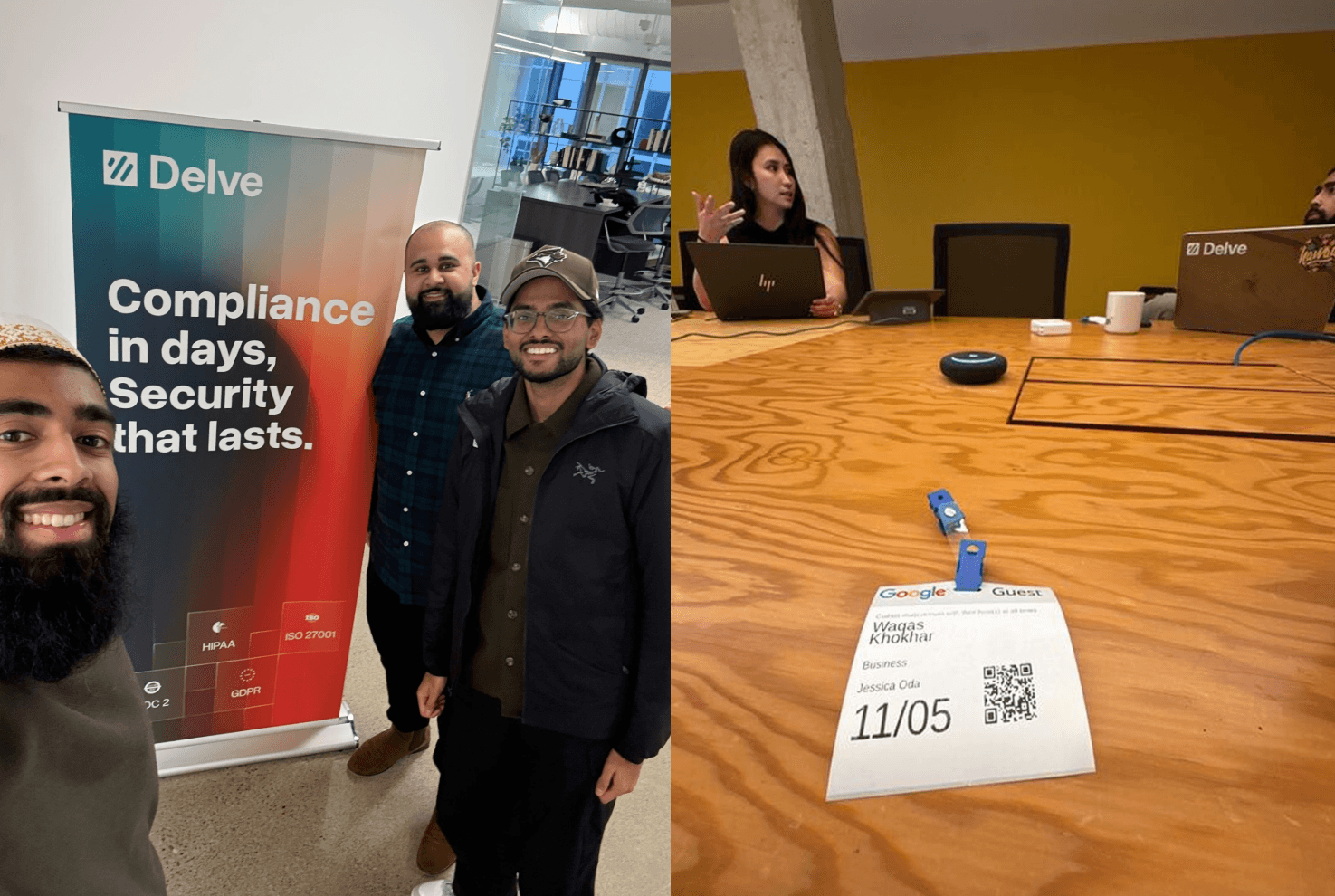
We saw this clearly in the Delve account. LinkedIn was not treated as a standalone lead channel. It was part of a broader system to push enterprise conversations forward in a crowded compliance space. The LinkedIn channel alone generated $1.35M in pipeline and $169K in closed-won revenue, not by chasing cold conversions, but by consistently getting in front of senior decision-makers and staying present while deals matured over time.
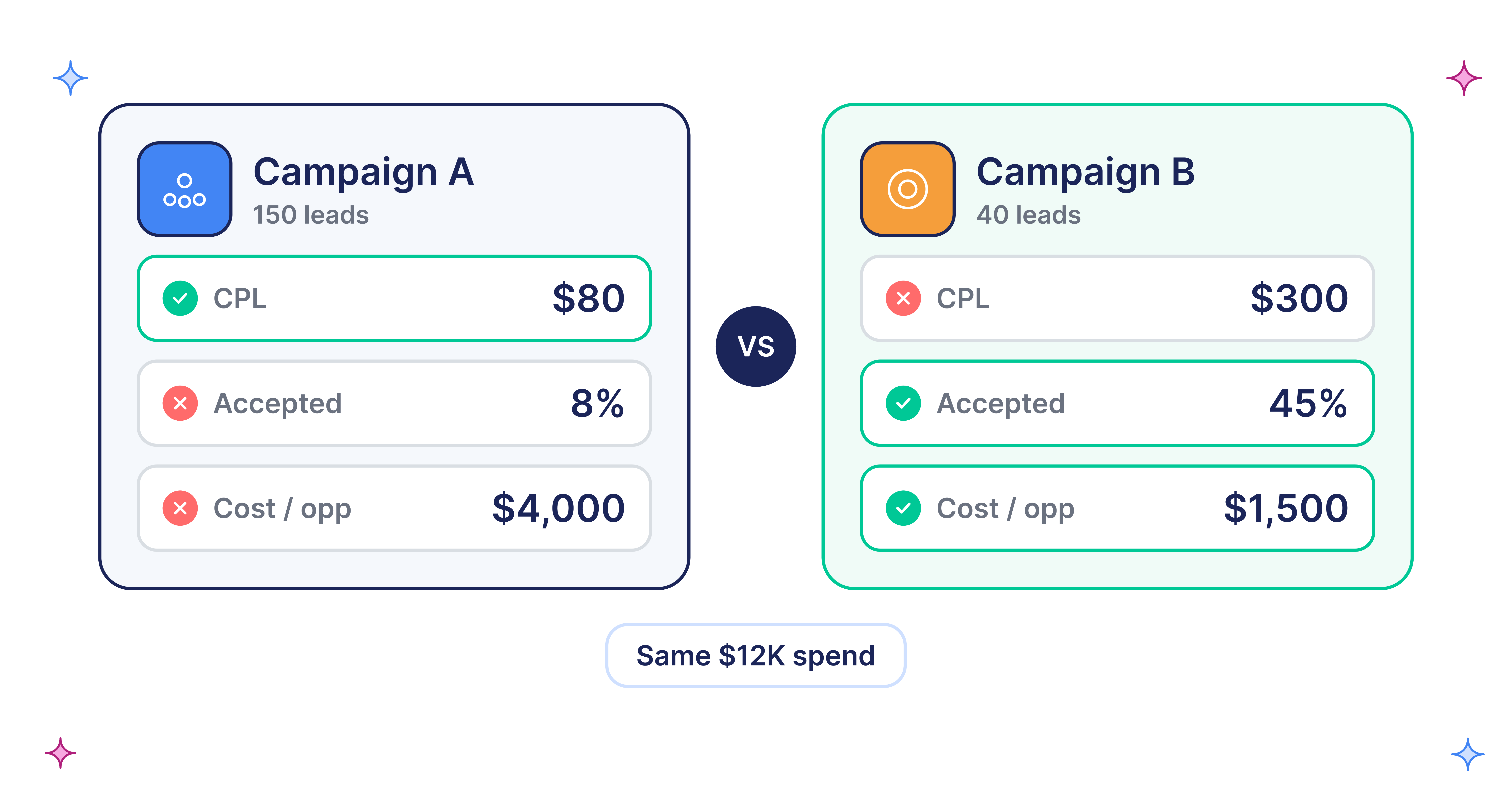
That is also why most LinkedIn campaigns fail. People judge them on the wrong timeline. They look at weekly lead volume, see expensive CPLs, and shut things down before any downstream pipeline shows up. They do not account for the fact that LinkedIn often shows up later in the attribution chain, not at the first click.
When you measure it properly, including the downstream pipeline and influenced revenue, it stops looking like an expensive channel. When you do not, it almost always looks broken.
Why LinkedIn Ads for SaaS are Different From Every Other Paid Channel
LinkedIn ads for SaaS work differently because the platform is the only paid channel where you can target a buyer by their actual job title, company, seniority, and industry simultaneously. Google can target intent. Meta can target interest. LinkedIn can target the buyer themselves.
That precision is the entire game. On Google, you compete in an auction for keywords that may or may not be searched by the right person. On LinkedIn, you decide that you want to reach VPs of Engineering at Series B SaaS companies in North America with 50 to 200 employees, and you can do exactly that. There's no other paid channel in B2B that gives you this kind of audience control.
The catch is that this precision comes with a cost. LinkedIn CPMs are 5 to 10 times higher than Meta. CPCs run between $7 and $15 on most B2B SaaS campaigns. A poorly targeted LinkedIn campaign burns money fast, and a poorly designed creative burns it even faster. The platform punishes anything generic. It rewards specificity, both in targeting and in messaging.
For B2B SaaS companies thinking in terms of demand generation vs lead generation, LinkedIn sits firmly on the demand generation side of that line. It is where you reach buyers before they are actively looking for a solution. Google captures buyers once that intent already exists.
Types of LinkedIn Ads and Which One Fits Which Job
LinkedIn offers seven main ad formats, out of which most B2B SaaS companies need three. The real win is knowing which format produces the best results for your budget, company, and industry.
I want to talk about 5 types of LinkedIn Ads that all B2B SaaS companies should look into.
- Sponsored Content
Sponsored content appears in the feed and looks like regular posts. This is the workhorse format for most B2B campaigns. It works for awareness, content distribution, and lead generation, especially when paired with a strong creative that doesn't feel like an ad.
- Thought Leader Ads
Thought leader ads are sponsored posts published from an individual's profile rather than the company page.
These have produced the strongest results across our accounts in 2025 and 2026 because they look exactly like organic content. Engagement rates run 2 to 3 times higher than standard sponsored content, and CTRs are often double.
If you have a founder, VP, or subject matter expert with a credible voice, this format should be the first one you test.
- Sponsored Messaging
Sponsored messaging delivers ads directly to LinkedIn inboxes.
While they worked really well in 2018, they are dated now and only create noise instead of a pipeline.
We rarely recommend it unless the offer is genuinely high-value (a private event, a specific account-based campaign) with a small and tightly defined audience.
Lead Gen Forms
Lead Gen forms are an add-on to Sponsored Content, where the prospect fills out a form without leaving LinkedIn. The form auto-populates with their LinkedIn profile data, which dramatically improves conversion rates.
The only problem I find with lead gen forms is the lead quality. It is often lower because the friction is so low that people convert without serious intent.
We use it selectively, not as a default.
Dynamic Ads, Text Ads, and Video Ads
They round out the format options. Video has a place for top-of-funnel awareness in larger budgets. Dynamic and Text Ads are mostly legacy formats now.
For a deeper analysis of when to use each, the Types of LinkedIn Ads breakdown covers the specific use cases in more detail.
LinkedIn Ads Targeting Options That Actually Move Pipeline
LinkedIn's targeting is its main competitive advantage as a B2B channel, but most companies use it badly.
The standard mistake is targeting that looks reasonable on a spreadsheet and fails in execution: "VPs of Marketing in North America." That audience is 200,000 people across thousands of companies of every stage, industry, and budget level. I call it a guess instead of a target.
Real targeting on LinkedIn is precise. The combinations that consistently work in B2B SaaS:
Job title + company size + industry.
"Heads of Engineering at SaaS companies with 50 to 200 employees in North America" gives you an audience of 8,000 to 15,000 people. That's tight enough to be a real ICP and large enough to scale.
Account list + role.
Upload a target account list of 500 to 2,000 companies that match your ICP, then layer roles on top. This produces the highest quality audience LinkedIn can deliver and is the foundation of most ABM programs.
Job function + seniority + company size.
Useful when the exact job title varies (e.g., the person responsible for procurement might be called five different things). Targeting by function captures all the variations while still keeping the audience qualified.
Excluding noise.
What you exclude matters just as much as what you include. You do not just define an audience; you also remove the people who will never convert.
That usually means excluding consultants, freelancers, agencies, and competitors. It also means excluding your existing customers and anyone already sitting in your pipeline. Most campaigns skip this and end up wasting a chunk of spend on impressions that were never going to turn into revenue in the first place.
When targeting is done properly, a LinkedIn campaign usually lands somewhere between 5,000 and 50,000 people. If it is much larger than that, you are probably too broad. If it is much smaller, you start running into frequency issues within a few weeks, where the same people see your ads too often, and performance drops.
LinkedIn ABM campaigns deserve their own deeper read if account-based marketing is part of your strategy. The targeting and budgeting math is meaningfully different.
How Much Do LinkedIn Ads Cost?

LinkedIn ads cost between $7 and $15 per click on most B2B SaaS campaigns, with CPMs ranging from $40 to $80 depending on how competitive your audience is. Those numbers are higher than every other paid channel for a reason: the targeting is more precise, and the audience is more valuable.
The more useful question isn't what LinkedIn costs per click, but what minimum monthly budget actually produces results. Based on our experience running campaigns across dozens of B2B SaaS accounts, here are the bands that work:
- Under $4K/month: Too low to generate enough data for the algorithm to optimize against. The campaign exists, but it can't really be measured or improved. Wait until the budget can move higher, or run a different channel first.
- $4K to $10K/month: The realistic minimum for a single audience and a single offer. Enough data to refine targeting and creative, not enough for parallel testing.
- $10K to $25K/month: The sweet spot for most growth-stage B2B SaaS companies. Enough room to run two or three audiences in parallel, refresh creatives every two to three weeks, and build genuine attribution clarity.
- $25K+/month: Required for ABM at scale, multi-segment targeting, or programs that need to drive a significant pipeline within 60 to 90 days.
Now, I want you to ask yourself this question: how much pipeline do you need LinkedIn to generate, and what's your historical cost per qualified opportunity?
The answer determines how you think about the budget for LinkedIn.
For a deeper breakdown of how much LinkedIn ads cost and what the breakdown looks like by company stage, that's worth reading before you set a number.
What Does A Good LinkedIn Lead Gen Ad Look Like in Practice?
A good LinkedIn lead gen ad does not really look like an ad. It reads like something the buyer would have stopped on, even if it was not promoted. That is the standard.
There are a few things that consistently show up in ads that actually perform.
The first is a pattern interrupt in the opening line. LinkedIn cuts off posts after roughly 150 characters, so whatever sits before the “see more” is doing most of the work. If the first line is weak, most people never expand it. The ones that work either call out a real problem the buyer already has or say something slightly unexpected enough to earn the click.
Then there is specificity in what you are saying. Generic lines like “we help SaaS companies grow” do not hold attention. Specific claims, like we helped Delve generate $1.2M in pipeline in 90 days, which closed their $32M Series A, get read.
You also need a clear job-to-be-done. Before someone clicks, they should already understand what they are getting out of it. If that is unclear, conversion drops immediately.
Creative matters just as much. Over-designed ads, heavy branding, and polished stock visuals usually underperform. What tends to work better is simpler formats like screenshots, quick mobile-style videos, or founder-led clips that feel native to the feed.
And then there is the CTA. This is where most campaigns get it wrong. A cold audience is not ready for a demo. A warm audience does not need another blog. The CTA has to match where the buyer is in that moment; otherwise, even a good ad underperforms.
LinkedIn Ads vs Google Ads: Which one should come first?
LinkedIn Ads and Google Ads do different jobs, so the question of which comes first depends on whether your category already has search demand or not.
If buyers are actively searching for your category on Google, Google Ads comes first. It's a faster path to closed revenue because you're capturing demand that already exists. LinkedIn becomes the channel you add second, once Google has proven the unit economics work.
If buyers don't yet know they need your product (most early-stage SaaS, new categories, or technical products that need education), LinkedIn comes first. Google Ads won't produce results because no one is searching. LinkedIn builds the awareness and education that creates the demand, which Google can later capture.
For most growth-stage B2B SaaS companies, the answer is to run them together. The two channels reinforce each other in ways that can't be matched by either one alone.
A buyer sees a LinkedIn ad in week one, sees branded content from your team in week two, then Googles your category in week three. The Google ad they click on converts at 3 to 5 times the rate of cold Google traffic because LinkedIn pre-warmed them. That compounding effect is what real demand creation looks like in B2B.
LinkedIn Ads vs Google Ads covers the breakdown in more depth if you're trying to decide which to prioritize first.
LinkedIn Ads Best Practices for B2B SaaS
LinkedIn ads best practices for B2B SaaS usually come down to a small set of things that actually move performance. Most accounts do not fail because they are missing a strategy. They fail because they do not execute these consistently.
[table]
Area | What to do | What it changes
Creative refresh | Refresh cold audience creative every 2 to 3 weeks. Treat a 20 to 30 percent CTR drop from the launch baseline as fatigue, not fluctuation. | Prevents performance decay and keeps engagement stable in small audiences
Frequency control | Monitor frequency closely. If someone sees your ad more than 4 times without converting, treat it as diminishing returns. | Stops wasted impressions and protects efficiency
Audience structure | Separate cold, warm, and warm-engaged audiences into different campaigns with different messaging and CTAs. | Aligns message with intent instead of forcing one ad to do everything
Conversion tracking | Do not optimize only for form fills. Track cost per qualified opportunity, not cost per lead. | Prevents false positives and shows real pipeline impact
[/table]
You have three types of audience on LinkedIn.
Cold audiences need education before anything else. Warm audiences that have already engaged with content can handle stronger offers. Warm-engaged audiences, meaning people who visited the site, opened forms, or watched videos, can usually be moved directly to demo or trial CTAs.
Most accounts do not actually do more than this. The ones that perform consistently are not following more rules. They are just strict about these ones.
How to Measure LinkedIn Ads Attribution for B2B SaaS ROI
LinkedIn ads attribution for B2B SaaS is where a lot of companies underestimate the channel's impact.
The reason is simple. Most buyers do not see a LinkedIn ad and convert on the same day. They engage with content, visit your site later, come back through Google or direct traffic, and eventually become opportunities weeks or months down the line. If your reporting only credits the last click, LinkedIn often looks like it is contributing very little to the pipeline.
That creates a problem.
When marketers cannot clearly see LinkedIn's contribution to revenue, the first instinct is usually to reduce spend or shift budget elsewhere. Not because the channel is underperforming, but because the reporting makes it look that way.
We saw this with Delve. The team was considering pulling back on LinkedIn because they could not clearly connect ad spend to their pipeline. Like many B2B SaaS companies, they were looking at incomplete attribution data and struggling to understand which opportunities had actually been influenced by the channel.
To solve this, we used Fibbler to connect LinkedIn engagement back to account-level pipeline activity. Instead of looking only at leads and form fills, we could see which companies had interacted with LinkedIn campaigns and whether those same companies later became qualified opportunities or customers.

That visibility changed the conversation. LinkedIn stopped looking like a high-cost channel with unclear returns and became a measurable contributor to pipeline growth.
If you want a deeper breakdown of the attribution model, tracking setup, and reporting framework behind this approach, we cover it in our guide on LinkedIn Ads Attribution for B2B SaaS ROI.
When should B2B SaaS hire a LinkedIn ads agency?
Hire a LinkedIn ads agency when one of three things is true:
- Your in-house team doesn't have specialist depth in the platform.
- You're spending $10K+ per month, and the work isn't producing a pipeline.
- Or you can't yet measure LinkedIn's attribution clearly enough to know what's working.
A senior in-house LinkedIn specialist costs $130K to $180K per year in salary, plus benefits, equity, and the time it takes to ramp them up. A specialist agency at $4K to $7K per month gives you immediate access to the pattern recognition from running dozens of B2B SaaS LinkedIn campaigns simultaneously.
That comparative breadth is what makes the agency math work at scale, even for companies that already have marketing teams.
The work that breaks first when an in-house generalist runs LinkedIn:
- Creative refresh cadence. Most internal teams refresh creative monthly instead of every two to three weeks. Performance flattens and never recovers.
- Audience refresh. Internal teams often leave audience definitions unchanged for months. The signal stops working as the audience either fatigues or as the targeting drift accumulates.
- Attribution wiring. Connecting LinkedIn engagement data to CRM pipeline data requires technical depth most internal teams don't have. Without it, you can't measure what's working.
- Frequency capping. Frequency above 4 quietly kills campaign performance. Internal teams often don't catch it because their reporting doesn't surface frequently and clearly.
If your LinkedIn program is producing pipeline already and you have a senior specialist running it, keep it in-house. If neither of those is true, a specialist agency will pay for itself in the first 90 days. For a wider view of the best agencies for LinkedIn Ads, that comparison is worth reading before you shortlist.
The Bottom Line
LinkedIn Ads for B2B SaaS work. The question is whether they're being measured, targeted, and structured in a way that allows them to work.
Most campaigns that struggle are failing because the audience is too broad, the messaging is too generic, the attribution is incomplete, or the campaign never had enough time and data to generate meaningful results.
The companies that see pipeline from LinkedIn know who they are targeting, what they want to be known for, and how they are measuring success beyond lead volume.
If your LinkedIn campaigns have been running for months and you still are not sure what impact they are having on pipeline, that is usually the first thing worth fixing.
And if you want a second set of eyes on your account, ScalixAI helps B2B SaaS companies turn LinkedIn into a predictable pipeline channel through strategy, execution, and attribution that connects back to revenue.