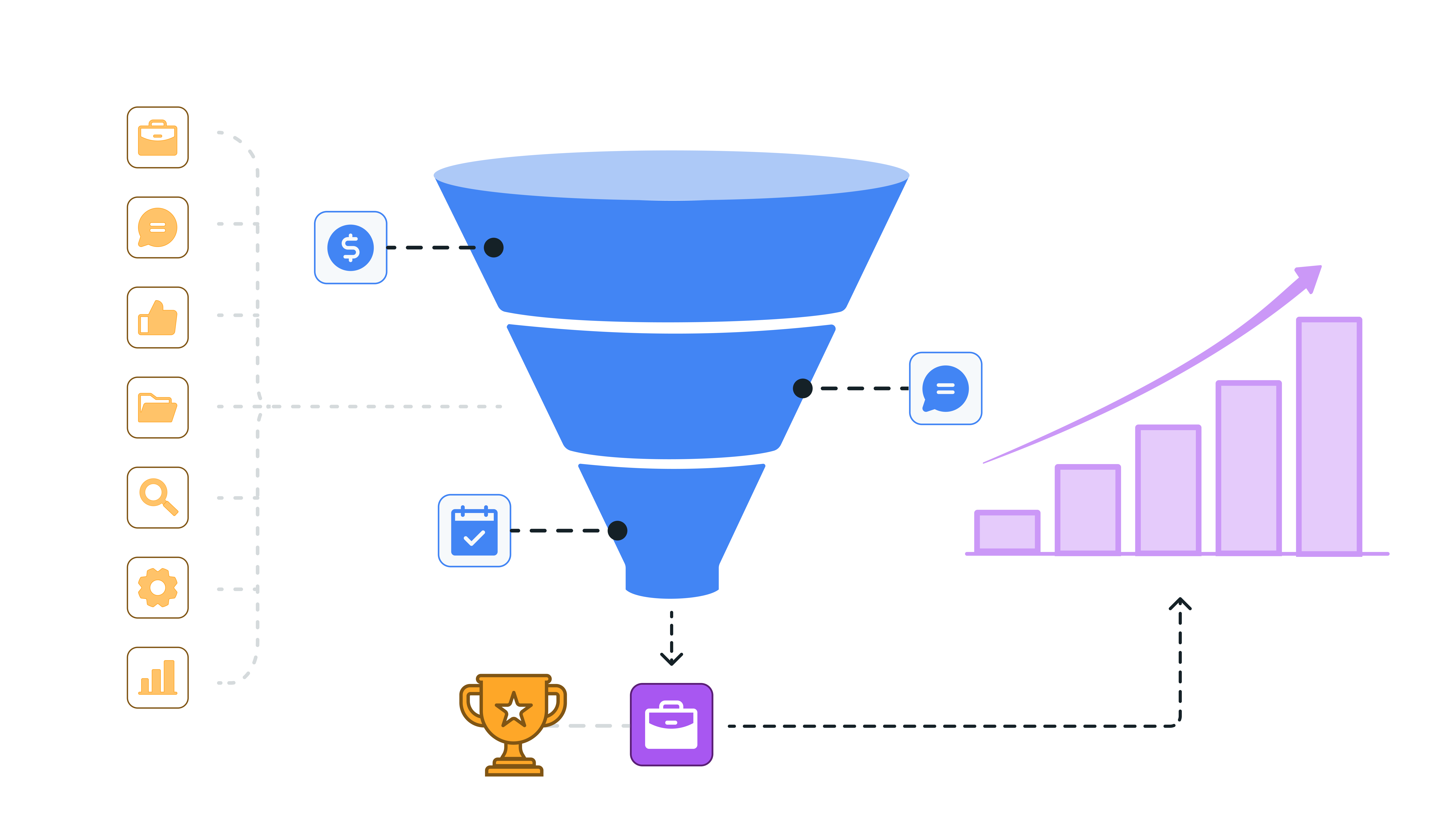
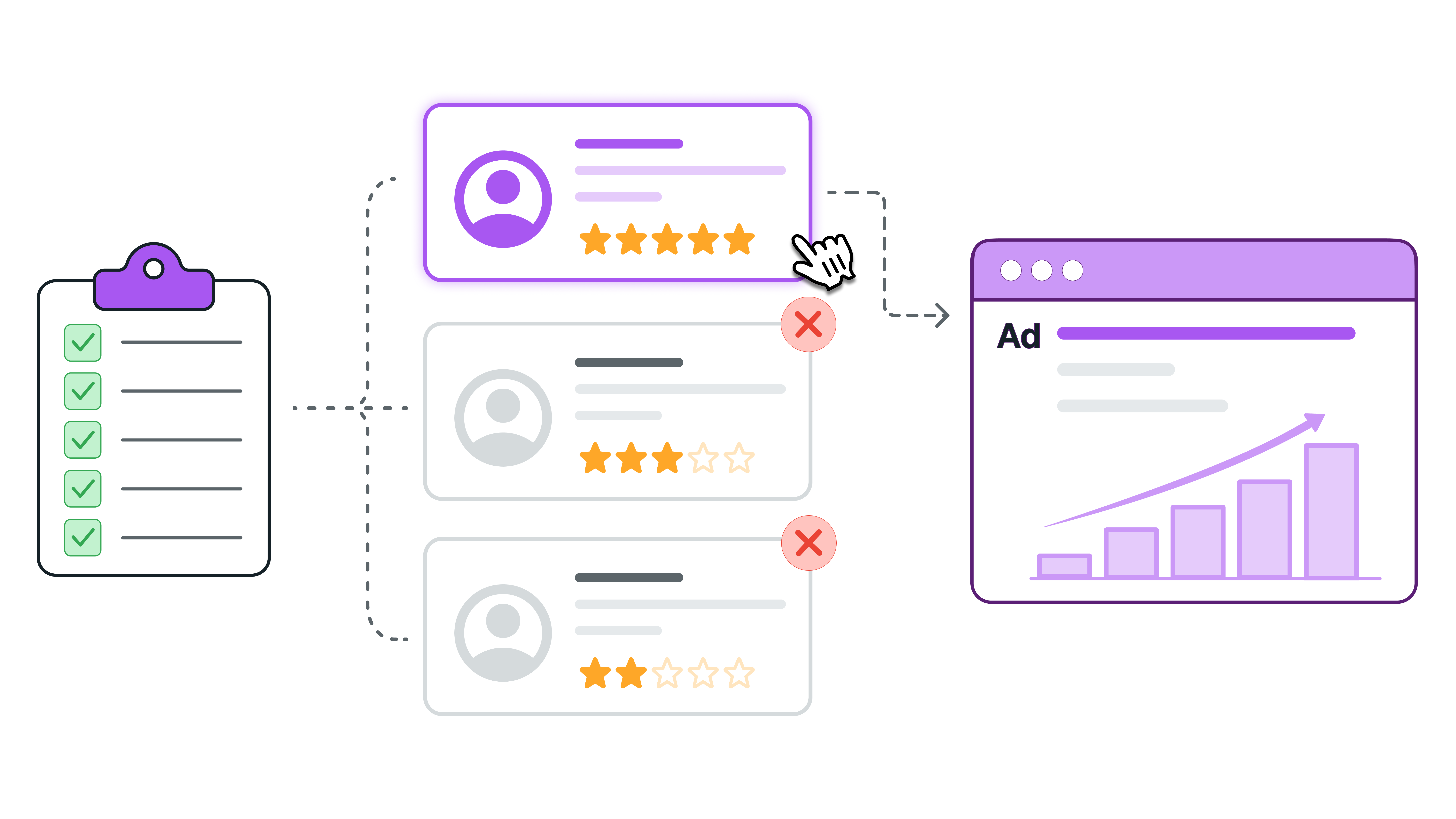
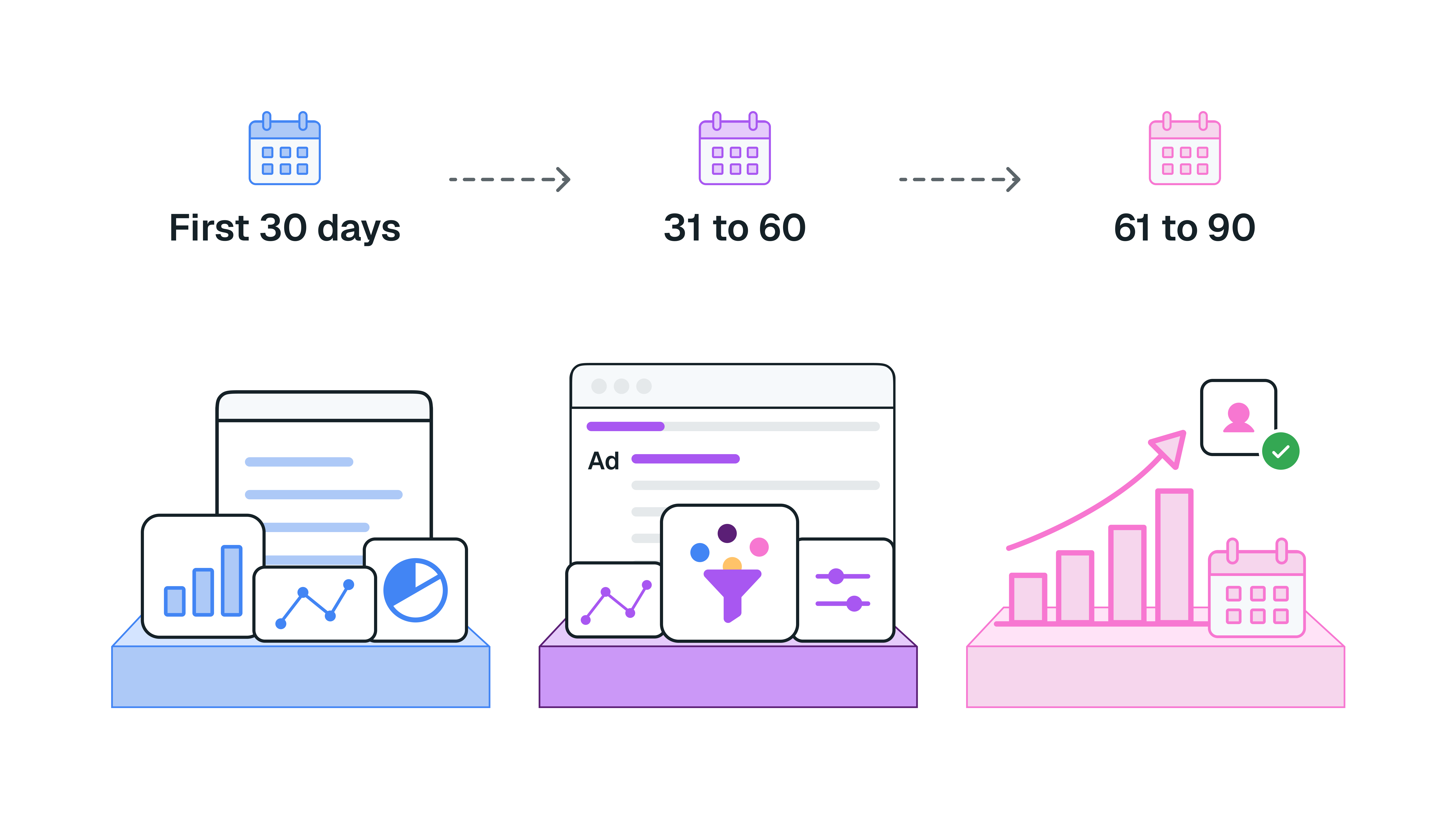
LinkedIn Ads With Nothing To Show Your CFO?
We fix the attribution. ScalixAI manages LinkedIn Ads for B2B SaaS and makes results visible.
Share this Article



Key takeaways
LinkedIn Ads attribution for B2B fails because last-click models ignore multi-stakeholder buying behaviour.
Company-level attribution revealed 32.25x ROAS that last-click data made completely invisible.
LinkedIn creates demand, and Google captures it. Measuring both the same way produces wrong conclusions.
A 90-day attribution window is the minimum for B2B SaaS sales cycle accuracy.
$779K in revenue was happening before the attribution. Proof was just missing from the room.
LinkedIn Ads attribution for B2B is broken by design, and most founders don't find out until they're sitting in a meeting defending spend with nothing clean to show for it.
This is the story of how a B2B SaaS client spent $24,162 on LinkedIn Ads over 90 days, generated $779,280 in closed revenue, and almost cancelled the channel because nobody could see it working.
TL;DR
LinkedIn Ads were silently driving pipeline for our B2B SaaS client. HubSpot said "direct traffic." Sales said, "they already knew us." Nobody was lying. B2B buying just doesn't fit last-click attribution models. Once we added company-level attribution through Fibbler, $1.33M in influenced pipeline and $779K in closed revenue became visible. That's 32.25x ROAS from a channel that was about to get cut.
LinkedIn Ads Attribution for B2B: Why the Numbers Always Go Missing
The LinkedIn Ads attribution problem is not a platform bug. It's a structural mismatch between how B2B buyers actually buy and how most marketing stacks measure that buying.
Here's what typically happens. A decision-maker at a target account sees your LinkedIn ad on a Tuesday. They don't click. Two weeks later, their colleague Googles your product name after a conversation. That click gets attributed to Google Ads or direct search. LinkedIn gets nothing. HubSpot says "organic." Sales says, "they already knew us."
This is just how B2B buying works. You have a multi-stakeholder, multi-touch, and it spans 60 to 90 days. A 2022 study by LinkedIn found that B2B buyers consume an average of 10+ pieces of content before making a purchase decision. Almost none of those touchpoints are trackable clicks.
The result is a systematic undervaluation of LinkedIn Ads in B2B marketing stacks. Channels that produce last-click conversions, like Google Ads, direct, branded search, take credit for deals that LinkedIn quietly influenced weeks earlier. And LinkedIn, operating at the top of the funnel where demand generation vs lead generation dynamics play out most clearly, gets cut for "not performing."
This is the attribution fight that every B2B growth marketer is exhausted from having. And until recently, there was no clean way to win it.
The Client Situation: Strong Pipeline, No Proof
Our client is a B2B SaaS company targeting mid-market and enterprise buyers. They had been running LinkedIn Ads with ScalixAI for several months. The campaigns were structured around their ICP, targeting by job title, company size, and industry. The content was designed to build awareness among decision-makers who weren't yet in active buying mode.
The top of the funnel marketing layer was working exactly as designed. Impressions were being served to the right companies. Engagement was consistent. But when the attribution conversation came up in reporting, as it always does in B2B, the numbers didn't hold up under scrutiny.
LinkedIn Ads Manager showed some booked calls. HubSpot showed mostly direct traffic and Google Ads. Sales said the prospects "already knew" the brand. The pipeline was moving. Nobody could prove LinkedIn was responsible for any of it.
The client's ask was clear: prove it, or we'll cut the budget.
The Attribution Setup: How We Made LinkedIn's Impact Visible
The solution was adding Fibbler, a company-level attribution tool that connects LinkedIn ad exposure to CRM data, showing which companies your ads reached and whether those companies subsequently entered the pipeline or closed as customers.
This is a fundamentally different attribution model from last-click. Instead of asking "which ad did this contact click before converting?", it asks "was this company exposed to our LinkedIn Ads before becoming a customer?"
That shift, from contact-level to company-level attribution, is what makes B2B attribution actually match B2B buying behavior.
Here's how the setup worked:
[table]
Step | Action | Why It Matters
1 | Connect the LinkedIn Ads account to Fibbler | Enables company-level impression tracking
2 | Sync CRM (HubSpot) with Fibbler | Maps pipeline and revenue to company identifiers
3 | Define attribution window | Set to 90 days to match the B2B sales cycle length
4 | Configure pipeline stages | Connects deal progression to ad exposure data
5 | Review the Company Insights dashboard | Shows the influenced pipeline and revenue of the company
[/table]
Once connected, the Company Insights dashboard showed what last-click attribution had been hiding.
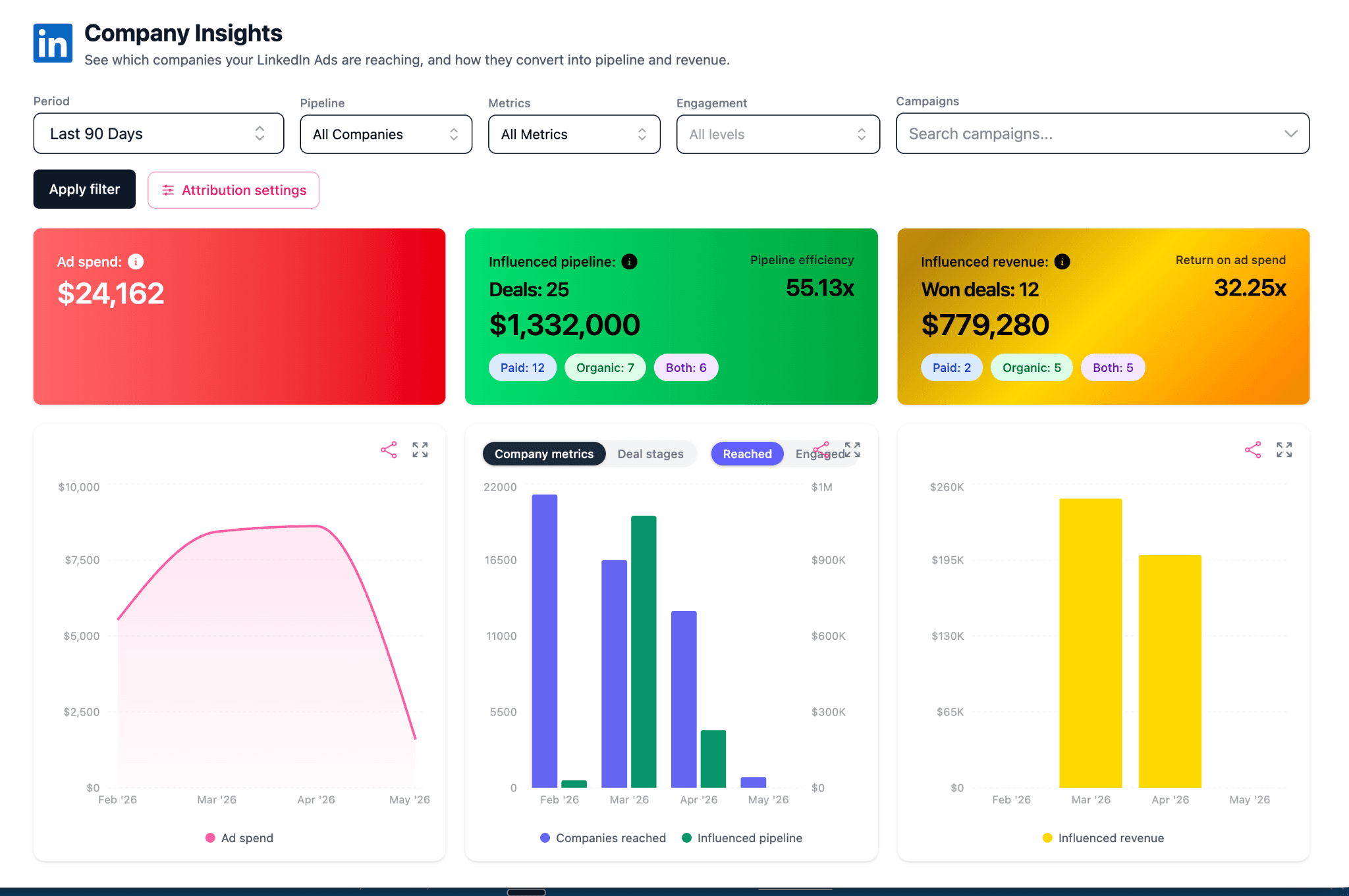
The Google Ads attribution for the B2B SaaS model we already had in place gave us the demand capture layer. Fibbler gave us the demand creation layer. Together, they produced a complete attribution picture for the first time.
The Results: What $24K in LinkedIn Ads Actually Produced
[table]
Metric | Result
Total ad spend | $24,162
Influenced pipeline (deals) | 25 deals
Influenced pipeline (value) | $1,332,000
Pipeline efficiency | 55.13x
Won deals | 12
Influenced revenue | $779,280
Return on ad spend | 32.25x
Paid-influenced deals | 12 pipeline / 2 won
Organic-influenced deals | 7 pipeline / 5 won
Both channels | 6 pipeline / 5 won
[/table]
The 32.25x ROAS number is the headline, but the breakdown tells the more interesting story.
Of the 12 won deals, 5 were influenced by both paid LinkedIn and organic touchpoints, and 5 were organic-only.
This confirms exactly what the attribution problem describes: LinkedIn Ads create the awareness that organic and direct search later capture. The channel doesn't get last-click credit. It earns influence credit, which is the correct way to measure a demand creation channel.
The pipeline efficiency of 55.13x is particularly significant. It means every dollar spent on LinkedIn Ads was associated with $55.13 in potential pipeline. Even accounting for deals that don't close, the economics are compelling at this ratio.
Does LinkedIn Ads Work for B2B SaaS?
Yes, LinkedIn Ads work for B2B SaaS when they are measured correctly and positioned correctly in the full-funnel system.
The common reason B2B SaaS founders conclude LinkedIn Ads don't work is that they're measuring the channel with last-click attribution and expecting it to produce the same direct conversion signals as Google Ads. Those are different channels doing different jobs. Conflating them produces the wrong conclusion.
Here's how the two channels actually compare in a properly structured B2B paid media system:
[table]
| LinkedIn Ads | Google Ads
Primary function | Demand creation | Demand capture
Buyer stage | Problem-unaware to problem-aware | Solution-aware of the decision
Attribution model | Company-level influence | Last-click / CRM-integrated
Measurement timeline | 60–120 days | 30–90 days
Primary metric | Pipeline influenced, ROAS | CPL, CAC, pipeline contribution
Best for | Building ICP awareness at scale | Intercepting in-market buyers
Fails when | Measured with last-click only | The campaign structure is wrong
[/table]
Studies show that around 80% of B2B buyers choose their preferred vendor before speaking to sales, and that vendor goes on to win the deal in most cases. That is the demand creation thesis. LinkedIn is where you earn the future pipeline. Google is where you capture it when buyers arrive.
This is why SaaS growth strategies that treat LinkedIn and Google as competing budget lines consistently underperform those that treat them as a connected system.
How to Prove LinkedIn Ads ROI in Your B2B Account
The attribution setup that made this result visible is replicable. Here's the framework:
Step 1 — Fix the measurement layer first
Before running any attribution analysis, verify that your CRM is properly syncing company-level data. Contact-level attribution will always undercount LinkedIn's impact in B2B because multiple contacts from the same company interact at different points in the buying journey.
Step 2 — Add company-level attribution
Tools like Fibbler connect LinkedIn ad exposure to company identifiers in your CRM. This reveals which target accounts were reached by your campaigns before they entered your pipeline, closing the attribution gap that last-click models create.
Step 3 — Set a 90-day attribution window
B2B sales cycles average 84 days. An attribution window shorter than your sales cycle will structurally undercount influenced revenue. Set your window to match your actual deal velocity.
Step 4 — Separate demand creation from demand capture in reporting
LinkedIn's role is influence and awareness. Google's role is capture and conversion. Reporting on both with the same metrics produces misleading conclusions. LinkedIn should be measured on pipeline influenced, ROAS on influenced deals, and account reach within ICP. Google should be measured on CPL, CAC, and direct pipeline contribution.
Step 5 — Layer retargeting to close the loop
Buyers who engage with LinkedIn content but don't convert immediately are the highest-value retargeting ads audience available. LinkedIn retargeting keeps your brand visible to warm accounts. Google captures them when they search. The combination is what produces a compounding pipeline.
Step 6 — Build a unified reporting view
Here is the full picture. LinkedIn influence, Google capture, and CRM pipeline progression should live in one reporting view. When attribution is siloed by platform, the cross-channel story gets lost, and budget decisions get made on incomplete data.
What This Means for B2B SaaS Founders Evaluating LinkedIn Ads
If you have run LinkedIn Ads, looked at the last-click attribution, and concluded the channel doesn't work, there is a meaningful probability you are looking at the wrong numbers.
The buying behavior that B2B SaaS buyers exhibit the most is researching for weeks. This includes looking at multiple stakeholders and consuming content before ever booking a call, which is invisible to last-click models. That invisibility is not a LinkedIn failure. It is a measurement failure.
The $779K result above was happening before we added company-level attribution. The campaigns were working the whole time. The proof was just missing.
Every B2B SaaS company conducting best agencies for LinkedIn Ads research before committing to a managed engagement should be asking one question: Does this agency understand attribution well enough to show me what LinkedIn is actually producing and not just what it claims?
That question separates agencies that run ads from agencies that build revenue systems.
The Bottom Line
LinkedIn Ads attribution for B2B SaaS is not a solved problem, but it is a solvable one. The gap between what LinkedIn is producing and what your reporting shows is almost always a measurement gap, not a performance gap.
Our client's $779K in influenced revenue was real before we could prove it. The attribution setup made it visible. That visibility changed the conversation, from defending the channel to scaling it.
ScalixAI manages LinkedIn Ads for B2B SaaS as part of an integrated demand creation and capture system. If your LinkedIn spend isn't producing numbers you can defend in a board meeting, book a free audit, and we'll show you what the channel is actually producing.