Your SaaS has the product. Does it have the growth system?
Let's build one that actually scales.
Share this Article



Key takeaways
SaaS growth strategies fail when they optimize for activity instead of revenue and unit economics.
SaaS market revenue hits $512B in 2026. Market growth doesn't automatically become company growth.
CAC, LTV, payback period, and churn are the metrics that determine whether growth is real.
Rebuilding acquisition around revenue tracking, not surface metrics, produced $1.2M for Delve in six months.
The channel that brings revenue deserves more budget, everything else is just creating noise.
Most SaaS growth strategies look good in theory, but only few actually turn marketing into a real growth engine.
The SaaS market itself is expanding rapidly, with global revenue projected to reach $512.27 billion in 2026, growing at a 14.71% annual rate through 2030 to nearly $887.05 billion.
The opportunity is massive.
But market growth doesn’t automatically translate into company growth.
Some SaaS companies break past $10M ARR and keep compounding. Meanwhile others stall at $2–5M, stuck testing channels, watching CAC creep up, and chasing inconsistent revenue.
Some are even competing in the same category with similar positioning. Yet one builds predictable growth while the other struggles to scale.
The difference usually isn’t effort. It’s whether there’s a real SaaS growth strategy in place, and whether execution is tied to revenue, not just activity.
The SaaS companies that scale don’t jump from tactic to tactic every quarter. What they do is they get clear on how they acquire customers, what it costs, and what those customers are actually worth.
They know their numbers. They know which channels can be doubled down on and which ones are just creating noise.
And that’s the lens we bring at Scalix AI.
We’re not interested in campaigns that look busy. We care about whether marketing is driving real revenue, improving efficiency, and creating growth you can actually predict.
What is a SaaS Growth Marketing Strategy?
A SaaS growth marketing strategy is simply a plan to grow revenue in a way that can scale.
Not just generate leads or drive traffic, but actually grow revenue.
This means knowing where your customers come from, what it costs to acquire them, and how long it takes to make that money back. It also means understanding what happens after someone signs up because growth is a full funnel effort.
From the first click to onboarding to retention, everything affects whether revenue compounds or stalls.
When a SaaS company has a real growth strategy, decisions become clearer. You know which channels deserve more budget. You know which experiments to stop. You know what numbers actually matter.
At the same time, if a SaaS growth strategy isn’t working, marketing turns into constant testing without direction.
We saw this with Delve. Once their paid acquisition strategy was rebuilt around revenue tracking instead of surface-level metrics, they generated over $1.2M in closed revenue in six months.
That’s what a B2B SaaS growth marketing strategy should do: It should make growth measurable, repeatable, and scalable
SaaS Growth Marketing Vs Traditional B2B Marketing
At first glance, SaaS marketing and traditional B2B marketing can look the same. But when you look at how growth is measured and scaled, the differences become clear.
[table]
Area | SaaS Growth Marketing | Traditional B2B Marketing
Primary Goal | Predictable, scalable revenue growth | Lead generation and brand awareness
Focus Metric | CAC, LTV, payback period, churn, expansion revenue | MQLs, SQLs, impressions, pipeline volume
Funnel Approach | Full funnel, acquisition to retention | Mostly top and mid-funnel focused
Speed of Optimization | Continuous testing and rapid iteration | Slower campaign cycles
Revenue Model Impact | Recurring revenue (MRR/ARR) requires retention focus | Often one-time or contract-based sales
Budget Allocation | Scales based on unit economics and efficiency | Often fixed quarterly or annual budgets
Channel Strategy | Performance-driven, measurable, scalable channels | Mix of brand, events, outbound, and long sales cycles
Decision Making | Data-led and experiment-driven | Often sales-led or brand-led
[/table]
Channels Used By Successful SaaS Companies To Grow
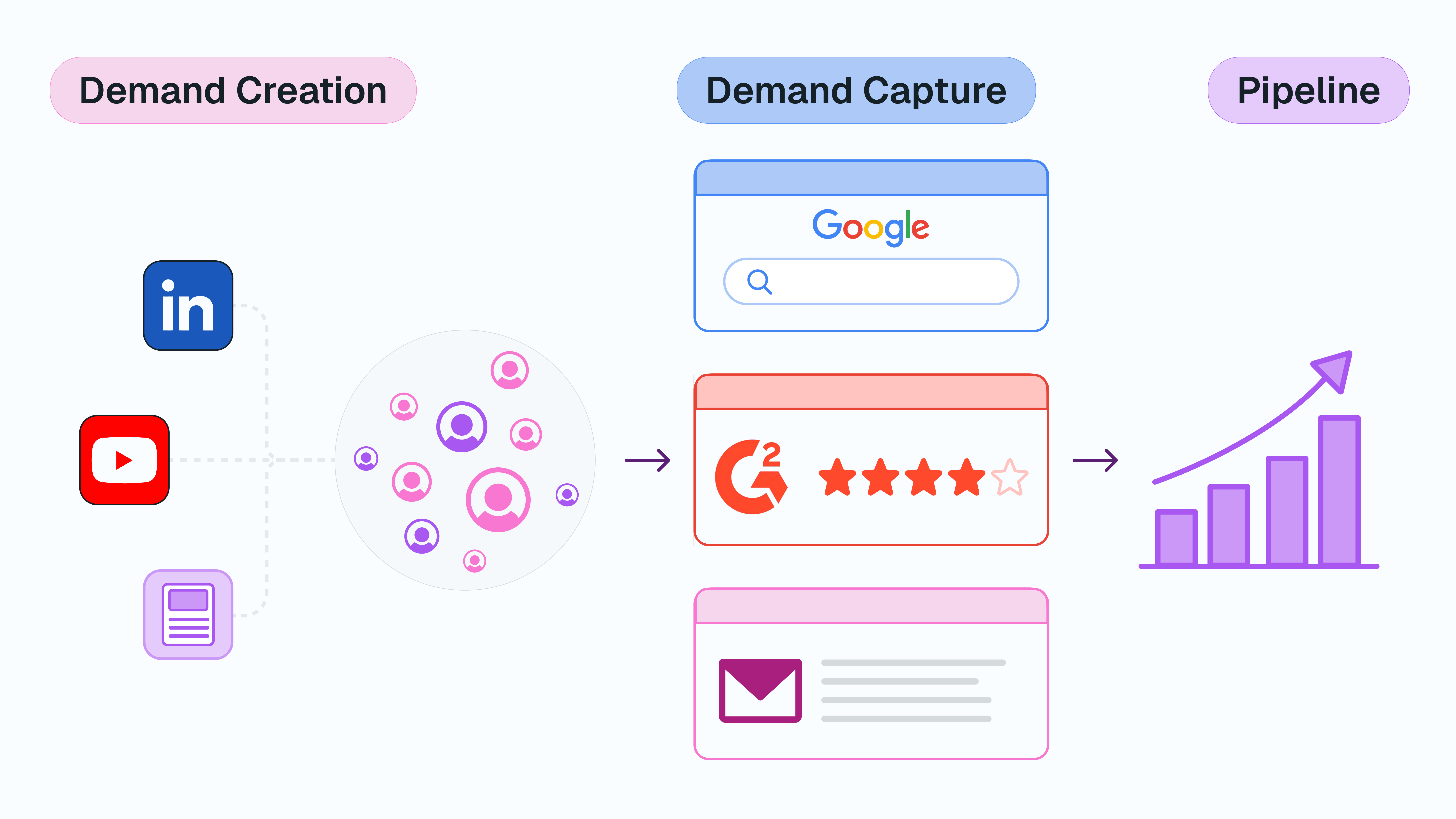
Successful SaaS companies grow by combining demand capture channels that convert existing intent with demand creation channels that build future intent.
Instead of thinking about demand generation vs lead generation, they know that no single channel scales a SaaS company. The ones that consistently compound ARR run two to four channels in parallel, with budget allocation tied directly to which channels produce the lowest CAC and the highest LTV.
Here is how the primary SaaS growth channels break down: what each one does, when it works, and where it fits in the funnel:
[table]
Channel | Role | Best For | Funnel Stage
Google Ads | Demand capture. Finds buyers actively searching for a solution | High-ACV B2B SaaS, PLG trial signups, demo-intent traffic | Bottom funnel
SEO and Content | Demand education. Ranks for problem and solution queries | Companies with a 12–24 month content investment horizon | Top and mid funnel
LinkedIn Ads | Demand creation. Builds awareness with buyers not yet searching | B2B SaaS targeting specific job titles, company sizes, or industries | Top funnel
Product-Led Growth | Demand through usage. The product acquires and expands users organically | PLG SaaS with fast time-to-value and natural viral loops | Full funnel
Outbound and SDR | Demand creation at the account level. Proactive pipeline building | High-ACV B2B SaaS with defined ICP and long sales cycles | Top and mid funnel
Partnerships and Integrations | Demand through distribution. Reaches users inside tools they already use | SaaS products that extend existing workflows | Mid and bottom funnel
Referral and Community | Demand through trust. Users bring in other users | PLG and prosumer SaaS with strong user satisfaction | Bottom funnel
[/table]
How the Best SaaS Companies Actually Use These Channels
The companies that scale past $10M ARR and keep compounding are not running every channel simultaneously. They identify one or two channels that produce a qualified pipeline at an acceptable CAC, prove the unit economics, and then expand deliberately.
Google Ads
Works best as the conversion layer for the intent that already exists. When someone searches "SOC 2 compliance automation software" or "CRM for B2B SaaS," they are not in discovery mode, they are evaluating vendors.
Showing up precisely at that moment, with a landing page copy that matches that intent exactly, is how Google Ads becomes a predictable pipeline channel rather than a cost center.
Monday.com and HubSpot invest heavily here because the search volume at the bottom of the funnel is consistent and the buyer intent is unmistakable.
SEO and Content
It compounds over time in a way that paid channels cannot.
HubSpot built a dominant market position not just through product quality, but through years of educational content that attracted buyers at every stage of the problem-awareness journey.
The trade-off is time. Organic content takes 6 to 18 months to generate meaningful, consistent lead volume. For SaaS companies that need a pipeline now, it runs in parallel with paid, not instead of it.
Product-led growth
It is the most capital-efficient channel when the product delivers fast, obvious value.
Notion, Figma, and Slack all grew primarily because one user inside a company brought the product in, and usage spread naturally.
PLG works when time-to-value is short enough that users reach their "aha moment" before a sales conversation is required. When that condition is met, the product becomes the acquisition channel, and CAC drops dramatically.
It is the right channel for manufacturing intent that does not yet exist in search.
Only 5% of B2B buyers are actively searching for a solution at any given time. LinkedIn reaches the other 95%, the buyers who will need your product in 3 to 12 months but are not searching for it today.
For B2B SaaS with a specific ICP defined by job title, company size, or industry, LinkedIn demand creation is what keeps the Google Ads pipeline full 90 days from now.
Click here to discover the best LinkedIn Ads agencies for BAB SaaS in 2026.
Outbound
It remains relevant for high-ACV SaaS where the deal size justifies the cost of human-led prospecting.
It is not a scalable primary channel for most SaaS companies below $10M ARR, but as a complement to inbound, following up on high-intent visitors, engaging target accounts that have shown multiple signals, it closes the gap that paid and content leave open.
The Rule That Separates Growing SaaS Companies From Staling Ones
Every channel on this list can work. Most SaaS companies that stall do not have a channel problem; they have a measurement problem. They cannot tell which channels are actually generating revenue because attribution is broken, CRM data is incomplete, or success is being measured at the lead level rather than the closed-customer level.
The SaaS companies that compound growth consistently do one thing differently: they track the full journey from first click to closed revenue by channel, and they allocate budget based on that data, not based on which channel looks busiest in the dashboard.
That is the only reliable way to know which channels deserve more investment and which ones are just creating noise.
How You Should Measure SaaS Growth (The Key Metrics)
- Monthly Recurring Revenue (MRR)
- Annual Recurring Revenue (ARR)
- Customer Acquisition Cost (CAC)
- Lifetime Value (LTV)
- LTV to CAC Ratio
- Payback Period
- Churn Rate
- Net Revenue Retention (NRR)
- Activation Rate
- Trial-to-Paid Conversion Rate
How To Grow A SaaS Startup Without A Huge Marketing Budget
You don’t need a massive marketing budget to grow a SaaS company. You need clarity and discipline.
When we started working with FYXER, the goal wasn’t to increase spend blindly. It was to make sure the existing budget was being used efficiently.
So, what did we do? We tightened the campaign structure, focused on high-intent search terms, and refined the positioning so we were attracting users who were ready to convert.
We also shifted measurement toward actual customer acquisition and revenue, not surface-level metrics. Once the numbers were clear, scaling became a calculated decision instead of a risk.
That disciplined approach helped FYXER acquire over 10,000 customers and grow revenue 20×.
To make it simple for you, just understand this: a limited budget isn’t the problem, unfocused spend is. If you know your numbers and concentrate on what works, growth becomes far more achievable, even without massive resources.
10 SaaS Growth Strategies That Everyone is Talking About in 2026
So what are SaaS companies actually doing right now to grow?
Beyond the basics, there are a handful of strategies that keep coming up, not because they’re trendy, but because they’re working.
1. Make Product-Led Growth (PLG) Your Primary Growth Engine

In 2026, SaaS growth isn’t about who spends the most on ads. It’s about how quickly someone can try your product and see real value.
Product-Led Growth (PLG) means the product does most of the heavy lifting. Instead of pushing people through long demos or sales calls, you let them use the product first. If it solves their problem, they upgrade. If it doesn’t, they leave.
With customer acquisition costs rising and buyers preferring self-serve options, this approach has become one of the most efficient ways to grow.
Notion is a strong example. They offered a generous free plan, made it easy to share templates, and built collaboration into the core experience. When one person started using it, they naturally invited others. Entire teams adopted the product before sales ever stepped in.
Revenue followed usage. As teams needed more controls and advanced features, they upgraded.
2. Use Google Ads to Capture High-Intent Demand
Not every SaaS company grows purely through product-led adoption. Many accelerate growth by showing up when buyers are already searching for a solution.
That’s where your Google Ads strategy comes in.
When someone searches for terms like “best accounting management software” or “CRM for startups,” they’re not browsing. They’re evaluating options.

Companies like Monday.com and HubSpot consistently appear in these searches because they understand the value of high-intent traffic.
Instead of focusing on spending higher, focus should be on targeting the right searches.
Skip running broad awareness campaigns because strong SaaS teams focus on keywords that signal buying intent. They track performance against actual customer acquisition and revenue, not just clicks.
When done properly, Google Ads becomes a demand capture channel. You’re not convincing people they need a solution. You’re meeting them at the moment they’re already looking.
3. Obsess Over Customer Acquisition Cost (CAC)
SaaS Growth marketing is exciting. But if you don’t understand your customer acquisition cost, it can quietly hurt you. So let’s help you understand CAC first.
CAC is simply how much it costs to acquire one paying customer. That includes ad spend, tools, sales effort. That’s basically everything tied to bringing someone in.
The reason this matters is simple: if it costs more to acquire a customer than they’re worth, growth becomes expensive very quickly.
Strong SaaS companies keep a close eye on this number.

Take Notion, for example. Because much of its growth came from organic sharing and product-led adoption, the cost to acquire new users stayed relatively low compared to companies relying heavily on outbound sales or large ad budgets. That gave them room to scale without burning cash at the same rate as competitors.
What Lower CAC does is it creates flexibility. You can reinvest more into growth. It gives you the confidence to experiment. You can scale comfortably.
But when the CAC is unclear, scaling becomes risky.
So before you increase spend, launch new campaigns, or hire more sales reps, ask yourself this simple question: does the acquisition cost make sense to you?
If the math is working, it’s time for you to scale.
4. Build a Content and SEO Engine That Compounds
For SaaS companies, content works best when it’s built for acquisition, not just visibility. A strong content strategy for SaaS startups focused on rapid growth starts with search intent.
The goal isn’t to publish more. It’s to rank for keywords that signal real problems and real buying intent.
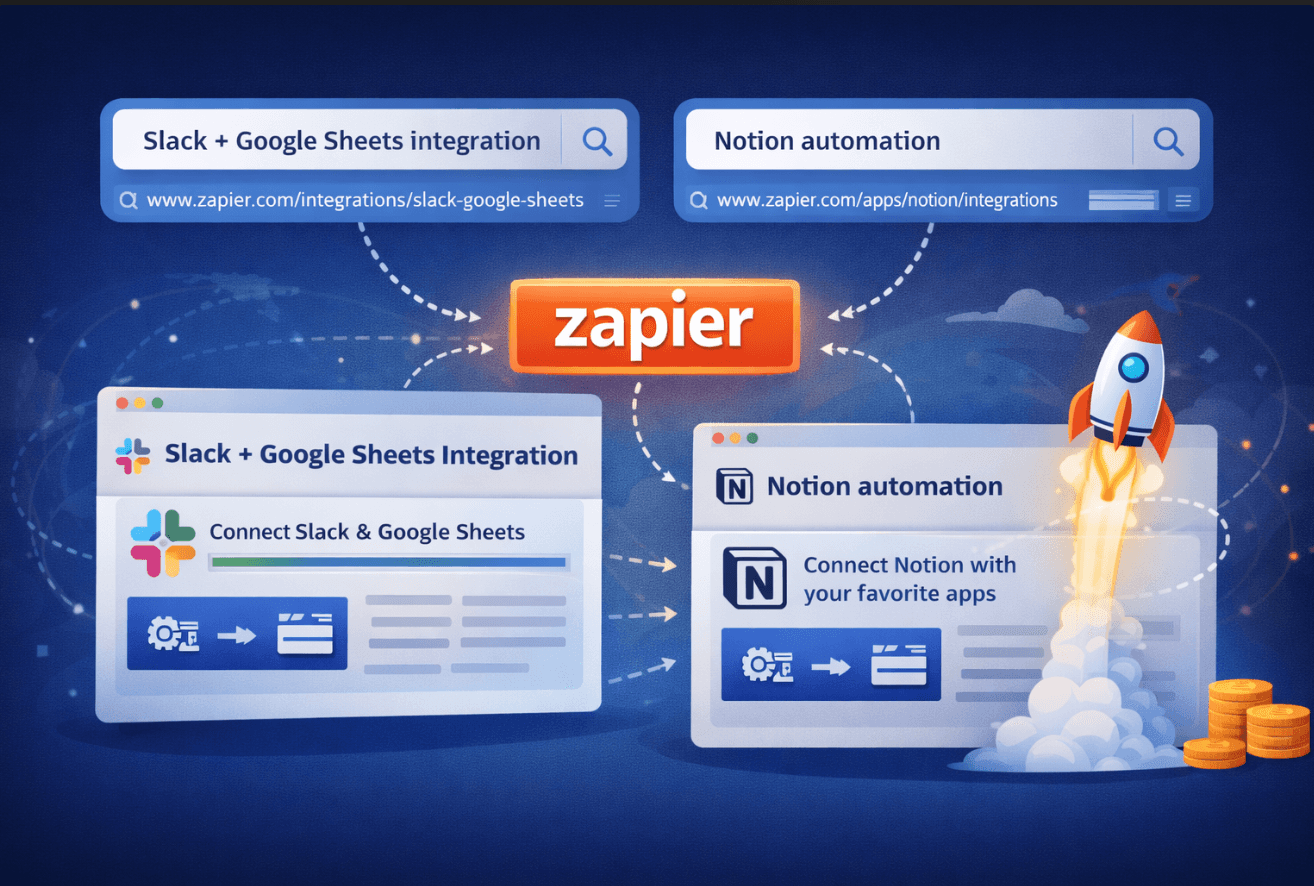
Zapier is a clear example of this. Instead of writing broad blog content, they created thousands of integration pages targeting searches like “Slack + Google Sheets integration” or “Notion automation.” These pages match specific intent. Someone searching that already wants to connect tools. Zapier simply provides the solution.
It’s scalable because the structure is repeatable, and the traffic is qualified.
Semrush takes a different but equally deliberate approach. Their educational guides rank for competitive terms like “SEO strategy” and “keyword research.” Many of these articles include real data, templates, and walkthroughs using their own tool.
Readers don’t just learn something; they see how to apply it.
Over time, this builds steady organic traffic that compounds. Rankings improve, internal links strengthen authority, and updates keep content relevant.
That’s how SEO becomes a growth channel. When content matches search intent and connects directly to product value, it keeps bringing in users month after month.
5. Strengthen Retention Before Scaling Growth
One of the most efficient ways to grow a SaaS company is to increase the value of existing customers before chasing new ones.
Shopify does this well. While it earns subscription revenue, a significant portion of growth comes from additional services like Shopify Payments, apps, themes, and other add-ons.
As merchants grow, they adopt more of these services, and that snowballs into higher revenue per customer. At the same time, reliance on the platform deepens, which results in lower churn.
Higher revenue per user and longer retention directly increase Customer Lifetime Value (CLTV).
Instead of depending only on new signups, Shopify expands revenue within its existing base.
For SaaS startups, improving CLTV makes acquisition more sustainable. When customers stay longer and spend more, CAC becomes easier to justify.
Practical Ways to Increase CLTV
- Introduce tiered pricing with clear upgrade paths
- Offer add-ons or complementary features
- Use usage-based pricing where it makes sense
- Improve onboarding to reduce early churn
- Encourage annual plans for longer commitment
- Build integrations that increase product stickiness
Just remember this: Your focus should be on increasing value, traffic will follow.
6. Make the First 10 Minutes Count
Most SaaS churn doesn’t happen because the product is bad. It happens because users never reach the moment where the product proves itself.
Slack understood this well. When a team signs up, they aren’t left to explore randomly. The product immediately pushes them toward action, like creating a channel, inviting a teammate, or sending a message.
The goal isn’t to “complete onboarding” but to start a conversation.
Once messages begin flowing, Slack becomes part of the team’s daily rhythm. At that point, it’s no longer a trial tool, but an important part of your workflow.
That shift from tool to habit is what drives activation.
For B2B SaaS, this matters more than feature depth. Really because think about it: if a new user can’t experience value in the first session, the trial will die quietly.
The faster someone reaches real usage, the higher the chances are of them to convert. And that snowballs into better retention and stronger lifetime value.
7. Design Pricing That Supports Expansion
In B2B SaaS, Pricing is not just a finance decision, but a growth lever.
Look at HubSpot, for example. Instead of offering one bundled product, they built separate hubs, like Marketing, Sales, Service, CMS, and Operations. Each one comes with tiered plans.
A company might start with a lower-tier Marketing Hub plan. As their needs grow, they move up a tier or add another hub. The account expands without starting from scratch.
That’s where pricing becomes part of a real B2B SaaS growth strategy. While acquisition gets the customer in the door, pricing determines how much that customer is worth over time.
If your pricing doesn’t leave room for expansion, growth becomes dependent on constant new acquisition. If it does, revenue grows inside the accounts you already have.
Just remember, pricing is central to all SaaS growth marketing strategies.
Common Pricing Growth Patterns
- Clear upgrade paths between tiers
- Separate products that can be added over time
- Pricing that scales as usage grows
- Add-ons that increase revenue without friction
Why Pricing Drives Growth
- It shapes how customers enter
- It affects how accounts expand
- It influences how long customers stay
- It determines how much you can afford to spend on acquisition
8. Align Paid Traffic With CRO
Most SaaS companies think CRO is about button colors and A/B tests. But you start executing, it dawns upon you that it starts with the ad itself.
If the promise in your Google or LinkedIn ad doesn’t match what users see after they click, no amount of on-page optimization will fix it.
Dropbox gets this right. When someone searches for “secure file sharing for teams,” they don’t land on a generic homepage. They land on a page focused on collaboration and security. The message is consistent. The next step is clear.
That’s CRO in practice, not just tweaking layouts. It’s making sure intent carries through the entire journey.
The same applies to LinkedIn Ads in B2B SaaS. If you’re targeting CFOs, the landing page needs to speak to financial impact. If you’re targeting RevOps, it needs to reflect operational efficiency. Sending paid traffic to a broad product page usually wastes budget.
The idea is to ensure the ads and pages align. By doing this successfully, you will notice improved conversion rates.
Actionable Tips for You:
- Match landing page headlines to the exact ad message
- Create separate pages for different audience segments
- Remove navigation distractions for paid traffic
- Align all the call-to-actions with the buying stage (demo vs. free trial)
- Track conversions beyond the form — down to qualified opportunities
- Review search terms regularly to remove mismatched intent
9. Build Growth Through Integrations and Ecosystems
Another way SaaS companies grow is by becoming part of platforms their customers already use.
HubSpot is a good example. Its App Marketplace allows other SaaS tools to integrate directly into its ecosystem. For those companies, growth doesn’t only come from ads or outbound. It actually comes from being visible inside HubSpot itself.
When customers browse for integrations, they discover new tools in context. Just know that distribution happens where intent already exists.
Integrations don’t just improve the product. They create steady exposure inside an established ecosystem.
10. Turn Customers Into a Growth Channel
Earlier, we talked about product-led growth, where the product drives adoption. Customer-led growth is different. Here, your existing users become the source of new demand.
Canva is a simple example. When someone shares a design, the person on the other end is introduced to the product without any ad involved. Over time, those small moments add up. Some users invite teammates. Others recommend it because it’s easy to use. The growth doesn’t feel engineered. It happens because people actually use and like the product.
In B2B SaaS, this can mean referrals, strong case studies, and visibility on platforms like G2.
Growth becomes more efficient when customers actively recommend you. It only happens because of trust which lowers friction. It ends up reducing acquisition costs significantly.
The Bottom Line
If you’ve read this far, you already know this isn’t about chasing every new growth trend.
It’s about getting the fundamentals right: tightening activation, structuring pricing properly, aligning paid traffic with CRO, and knowing your numbers before you scale.
Most SaaS companies don’t struggle because of a lack of tactics. They struggle because nothing is connected. Ads aren’t tied to revenue. Content isn’t tied to the product. Pricing isn’t built for expansion.
That’s when marketing feels expensive instead of productive.
If you’re leaning heavily on paid acquisition, it’s worth asking whether it’s being managed strategically. There’s a big difference between running campaigns and partnering with top PPC management services that understand SaaS growth, CAC, and long-term scalability.
At the end of the day, marketing becomes a growth engine when it’s disciplined.