




Key takeaways
A lead capture page fails when the exchange doesn't feel worth it to visitors.
Lead capture pages have one job. Everything else is a distraction from that.
Cold traffic converts best on free resource offers — low ask, high perceived value.
In paid campaigns, your lead capture page is where ad spend either converts or disappears.
A lead capture page is supposed to turn visitors into leads, but most of them don’t.
Not because the design is bad or the traffic is wrong. It’s because the page asks for something before you are ready.
That gap is bigger than most people realize. Landing pages typically convert at just 2–5%, which means the majority of visitors leave without taking action.
You’ve probably experienced this yourself.
You click on something that looks promising, maybe even exactly what you were searching for, and within a few seconds, you’re staring at a form asking for your email, your company, maybe even your phone number.
This is where you pause, still feeling a bit unconvinced.
Don’t assume that this is a traffic or a messaging problem.
It all usually comes down to one question: Does the page make the exchange feel worth it?
That’s what high-performing lead capture landing pages get right.
Let’s look at the 7 lead capture page examples in detail.
TL;DR
This blog breaks down what a lead capture page really is and why most of them don’t work the way people expect. It walks through real examples that actually convert, explains what makes them work, and clears up common confusion, like how they’re different from landing pages or click-through pages. And overall, it’s really about one idea: if the exchange doesn’t feel worth it to the user, they won’t convert, no matter how good everything else looks.
What Is a Lead Capture Page?
A lead capture page is a type of landing page designed to collect a visitor’s information, usually through form fields like name, email, or company, in exchange for something valuable.
Honestly, you should simply look at it as a trade.
Someone lands on your page, and you’re asking them for a small piece of information. In return, you’re giving them something they actually want.
That “something” could be:
- a downloadable guide or checklist
- a product demo
- a free trial
- a webinar
- or a consultation
The page is quite focused. Unlike other types of landing pages, a lead capture page is designed to remove distractions and give the visitor one clear direction: Take action or leave.
Now this action is tied to your lead generation goal.
When someone fills out those form fields, they’re no longer just anonymous traffic. They become a lead; someone you can follow up with, nurture, and eventually convert into a customer.
That’s what makes a lead capture page so important. It turns passive visitors into real opportunities.
The impact of a lead capture page is measurable. Research from HubSpot shows that businesses using targeted landing pages for lead capture can generate significantly more leads, with some companies seeing conversion rates increase as they refine their pages and offers over time.
Why Lead Capture Pages Matter for Lead Generation
A lead capture page is where your lead generation either works or quietly falls apart.
You can do everything right up to that point. You can target the right audience, dial in your messaging, and even go after high-intent keywords that convert. But if the landing page doesn’t follow through, none of it really matters.
This is especially true if you are running paid campaigns.
Because at that point, every click has a cost. And your lead capture landing page is the moment where that cost either turns into a lead or disappears.
In fact, research shows that the average landing page conversion rate is around 6.6% across industries, which means a large majority of visitors never convert.
That gap is not just a number. It is indicating to you something bigger. Not only is it highlighting wasted budget, but it is also indicating missed opportunities and a lost pipeline.
A strong page does a few things really well. It makes the next step feel obvious. Basically, it reduces hesitation by giving people a clear reason to act now instead of later.
A weak page does the opposite. It adds friction by asking for too much too soon, which makes people stop and think. And when people stop, they usually leave.
This becomes even more important in B2B.
Because you are not just collecting emails. You are trying to capture people who are actually evaluating solutions, people who could turn into real revenue down the line. And that means your page has to do more than just convert. It has to convert the right people.
That is why lead capture pages matter. They are not just part of the process; they are the point where intent either turns into a pipeline or disappears completely.
Lead Capture Page vs Landing Page: The Real Difference?
A lot of people use these terms interchangeably. While they’re closely related, you still need to be mindful of the distinction.
[table]
Aspect | Landing Page | Lead Capture Page
Definition | A standalone page designed around a specific campaign or goal | A type of landing page specifically built to collect user information
Primary Goal | Can educate, promote, or sell | Focused entirely on lead generation
User Action | Could be anything, for example, reading, clicking, buying | One clear action: fill out form fields
Conversion Focus | May or may not be conversion-driven | Fully optimized to increase conversion rate
Content Structure | Can include multiple sections, links, or pathways | Minimal, distraction-free, single focus
Call to Action (CTA) | Can vary depending on the goal | Very specific and direct
Use Case | Product pages, campaign pages, informational pages | Ebook downloads, demo requests, free trials, webinar signups
[/table]
Why This Difference Actually Matters
If you treat a lead capture page like a general landing page, you usually end up with:
- too many distractions
- unclear next steps
- lower conversions
A lead capture landing page works because it removes choice, giving you one goal.
And that clarity is what improves your conversion rate and makes your lead generation efforts actually work.
Lead Capture Page vs. Click-Through Page: What’s the Difference?
These two get confused all the time, and it’s easy to see why.
They’re both types of landing pages. They both sit between your traffic and your conversion goal.
But they do very different jobs.
[table]
Aspect | Lead Capture Page | Click-Through Page
Goal | Collect user information | Warm up the user before sending them forward
User Action | Fill out form fields | Click a button to continue
Friction Level | Higher because you’re asking for information | Lower since it only requires one click
Best For | Lead generation (ebooks, demos, trials) | Pre-selling before checkout or signup
Conversion Type | Converts visitors into leads | Moves visitors to the next step
[/table]
All you should know is that a lead capture page asks for commitment, whereas a click-through page builds the anticipation.
7 Lead Capture Page Examples (And Why They Work)
Let’s look at 7 formats used across high-performing lead capture pages.
1. The Free Resource Page
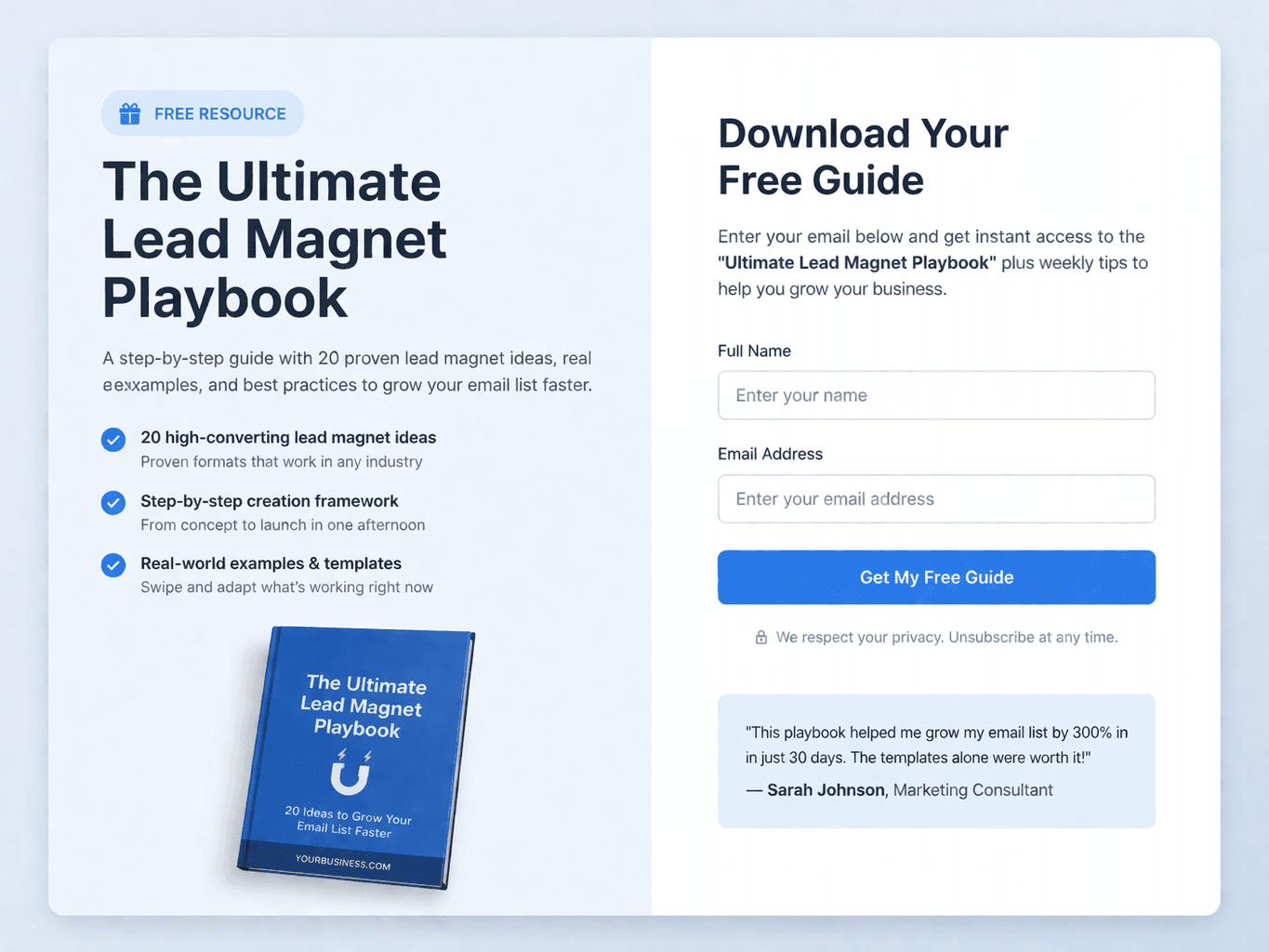
This is one of the most common lead capture page formats, often used in top of the funnel marketing.
Offer: Ebook, guide, or report
Why it works:
The user receives immediate value with minimal commitment. The perceived cost of sharing information is low, especially if the content promises a clear outcome.
Key insight:
For cold traffic, the strength of your offer matters more than design. If the value is compelling, users will convert even on a simple landing page.
2. The Webinar Registration Page
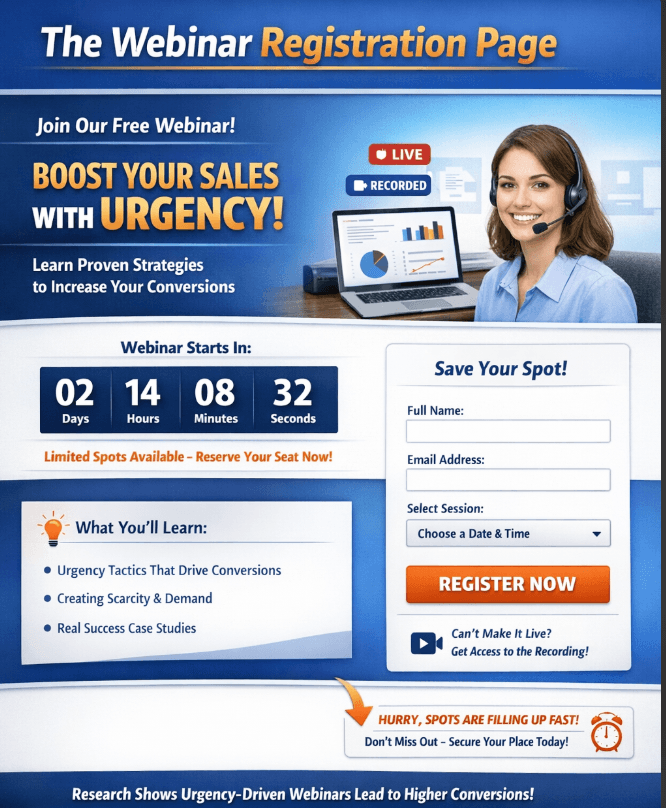
Offer: Live or recorded webinar
Why it works:
Webinars combine education with urgency. A time-bound event creates a psychological trigger that encourages faster decision-making.
Research shows that urgency-driven campaigns can significantly improve conversions when implemented correctly.
3. The Demo Request Page

Offer: Product demo
Why it works:
This format targets high-intent users who are already evaluating solutions. The call to action is clear and aligned with their stage in the buying journey.
What makes it unique:
Strong demo pages align closely with PPC keywords, ensuring message consistency between the ad and the landing page.
4. The Free Trial Page

Offer: Access to the product
Why it works:
It removes perceived risk. Instead of asking for commitment, it allows users to experience value first-hand.
Conversion principle:
Reducing friction and risk is one of the most reliable ways to improve conversion rate.
5. The Checklist or Template Page

Offer: Actionable resource
Why it works:
It promises immediate, practical value with minimal effort required from the user.
This type of lead capture landing page template performs well because it aligns with users who are actively looking for solutions rather than general information.
6. The Multi-Step Form Page
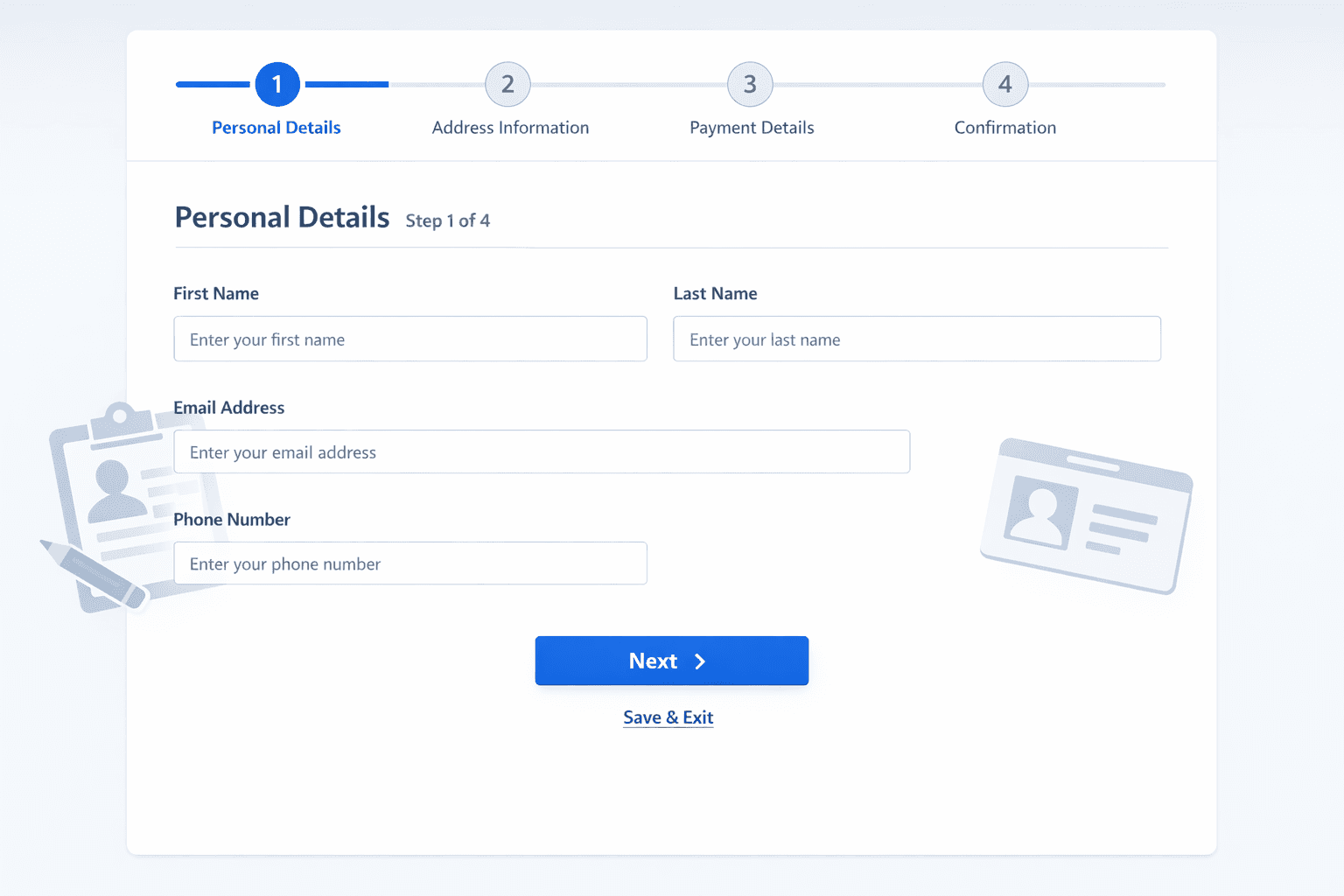
Offer: Consultation or qualification-based offer
Why it works:
Breaking form fields into multiple steps reduces perceived effort and increases completion rates.
Multi-step forms have been shown to improve conversions significantly compared to single-step forms by reducing user overwhelm.
7. The Minimalist High-Intent Page

Offer: Direct action (book a call, sign up)
Why it works:
It removes all distractions and focuses entirely on one outcome.
This format works particularly well for high-intent traffic from Google Ads, where users are already searching for a specific solution.
How to Create a Lead Capture Page That Converts
Building an effective lead capture page requires a structured approach. Here is your step-by-step guide to creating a lead capture page that actually converts.
Step 1: Define Your Offer Clearly
Your offer is the foundation of your page. Without a compelling offer, even the best design will fail.
Step 2: Match Copy & Design with Search Intent
Your page should reflect what users are searching for. This includes aligning with:
- PPC keywords
- User expectations
- Funnel stage
Step 3: Write a Strong Headline
Your headline should clearly communicate value and relevance.
Step 4: Design the Form
Carefully decide which form fields are necessary and how they impact user experience. Try to keep fewer fields.
Step 5: Optimize Through A/B Testing
A/B testing allows you to continuously improve performance.
Minor tweaks in headlines, CTAs, or layouts can increase conversions by 20–50% or more.
Lead Capture Page Best Practices
Rather than repeating generic landing page best practices, focus on what actually drives results.
- Have a clearly defined single goal: Every element on the page should support one action.
- Remove distractions: Simplify the user journey and eliminate unnecessary steps.
- Optimize for mobile: More than half of global web traffic comes from mobile devices, making mobile optimization essential.
- Don’t stop testing and optimizing: Performance is not static. Ongoing testing is required to maintain and improve results.
4 Common Lead Capture Page Mistakes
Here are the 4 mistakes B2B SaaS companies often make in their lead capture pages.
- Weak Offers: If the value exchange is unclear or unconvincing, users will not convert.
- Too Many Form Fields: Excessive information requests create friction and reduce conversions.
- Poor Message Alignment: Mismatch between ads and landing pages leads to lower engagement and higher bounce rates.
- Ignoring Search Engine Ranking Factors: Even the most optimized landing page cannot perform if it does not attract traffic. Understanding search engine ranking factors is essential for long-term success.
Final Thoughts
A good lead capture page makes the exchange feel worth it.
And while it looks simple, this is where most teams get stuck. Not because they can’t build a landing page, but because they’re not connecting the pieces: traffic, intent, messaging, and the page itself.
This is exactly where Scalix AI comes into the picture.
We help B2B SaaS companies align their Google Ads and lead capture landing pages so they actually work together.
From improving conversion rate through A/B testing to capturing leads, the goal is simple: better leads, not just more of them. This is what we did with Portless, too!
That’s why we’re trusted among the top Google Ad agencies in the US. Because in the end, it’s not about getting more clicks, but making each one of them count.


