Ready to see what a properly structured account can do for your pipeline?
Share this Article



Key takeaways
Campaign architecture matters more as budgets grow. Structure, tracking, and optimization drive pipeline efficiency.
Smart Bidding is only as good as your data. Feed it revenue signals, not just lead volume.
Branded search protects high-intent traffic from competitors bidding on your name.
Competitor keywords cost more, but they often reach buyers closer to a decision.
Performance Max can add conversions, but needs proper controls to avoid taking credit for existing demand.
What if I told you that most B2B SaaS accounts are fundamentally structured wrong? They're built like e-commerce accounts with one campaign per keyword theme, blended intent, shared bidding, and no separation between branded and non-branded traffic.
It's one of the biggest reasons SaaS teams spend heavily on Google Ads but see very little pipeline in return.
I spent 9 years inside Google, building the system from scratch. I know exactly what works and what doesn’t. I started Scalix to help B2B SaaS companies benefit from the knowledge I have gained over the years. And guess what? Fyxer, Oneleet, PAM, Portless, and others are all leveraging the inside knowledge I bring to the table.
After working on hundreds of accounts, I have noticed the same mistake every single time: The structure. Once you fix that, the same budget produces 3-5x the pipeline within 90 days.
In this blog, I want to focus on account structure. It's the first chapter of my Google Ads Playbook because no amount of optimization can fix an account that's built the wrong way.
Let’s get started.
A Quick Overview
- Why B2B SaaS accounts need to be structured by intent, not by keyword theme.
- You’ll understand the five campaign pillars every B2B SaaS account should have.
- Learn how to set up conversion tracking so Smart Bidding actually optimizes for revenue.
- Discover the 30/60/90 framework I use to launch, refine, and scale accounts, and the specific mistakes that quietly cap pipeline growth.
Why does B2B SaaS Google Ads account structure matter more than budget?
Because Smart Bidding optimizes at the campaign level, not the account level. Every campaign has its own budget, bid strategy, conversion goals, and learning phase.
When different types of intent are mixed within the same campaign, Smart Bidding starts treating them similarly and optimizes toward the average outcome rather than the best outcome for each search. For example, mixing branded with non-branded keywords, high-intent keywords with cold traffic, or BOFU keywords with audiences that are still discovering your brand.
If your account looks "fine" but is still underperforming, this is one of the first things to investigate. A strong B2B Google Ads strategy starts with giving the algorithm the right signals to optimize around. It is doing exactly what you’re asking it to do, so if the results aren’t what you want, the issue is often in the inputs you’re feeding it.
Structure is the framework that tells Google what matters. Get it right, and your account has room to compound over time. Get it wrong, and you end up spending more to generate the same or worse results.
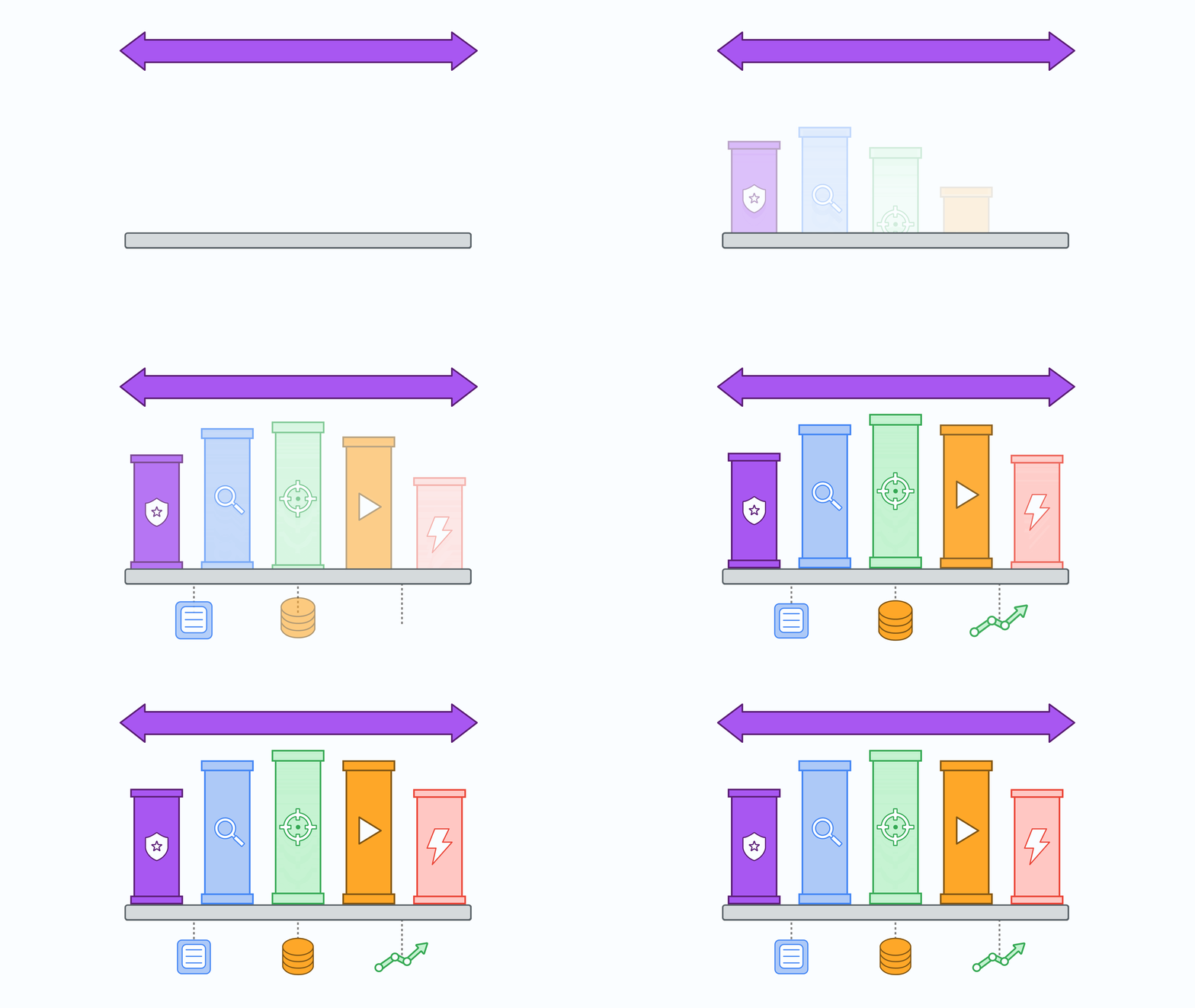
What are the five campaign pillars every B2B SaaS Google Ads account needs?
Every account I structure starts with the same five pillars.
They aren't "campaign types" in the Google Ads sense. They're intent-based buckets, and each one gets its own campaign, its own budget, its own bidding strategy, and its own landing pages.
1. Brand.
This campaign captures searches from people who already know your company or product. It includes your company name, product names, misspellings, and brand-plus-modifier searches like "Scalix AI pricing" or "Scalix AI reviews."
Because these users are already familiar with your brand, they typically convert at a much higher rate than non-brand traffic. The goal of this campaign is twofold: capture existing demand at an efficient CPA and protect your brand from competitors bidding on your name.
2. Non-Brand (Category).
These include high-intent searches from people actively looking for a solution to a problem your product solves, such as "SOC 2 compliance software" or "AI voice agent for dental offices."
This is where the volume lives, and where most of your pipeline will come from once the account is set up correctly. You create tight ad groups, exact and phrase match, and dedicated landing pages per theme.
Never mix branded and non-brand in the same campaign because each behaves completely differently, and Smart Bidding will destroy your CPA if you try.
3. Competitor.
People searching your competitors by name are in-market right now and open to alternatives. This is some of the highest-converting traffic available in B2B SaaS, and most companies don't run it because they think it's too aggressive.
It's not aggressive; it's obvious. You can create dedicated campaigns, tailored ad copy that acknowledges the comparison, and purpose-built comparison pages (never the homepage).
4. Demand Gen.
YouTube, Gmail, and Discover placements that reach potential buyers before they enter the search phase. The value of Demand Gen isn't just creating awareness; it's influencing the people who will eventually become your highest-intent Search traffic.
When built correctly, these campaigns create demand, build qualified audiences, and give Search campaigns warmer prospects to capture later. It is powered by first-party data, lookalike audiences, and creative designed around pipeline outcomes, not surface-level engagement.
5. Performance Max.
Performance Max works best when it has boundaries. Brand exclusions prevent it from absorbing branded intent, audience signals help guide the algorithm toward higher-value prospects, and thoughtful asset group structure creates visibility into what is actually driving results.
Without those controls, PMax can inflate performance metrics by claiming conversions that would have happened anyway. Properly managed, it becomes a way to expand reach and capture new demand instead of competing with your existing campaigns.
No two campaigns should compete for the same query. I cross-reference negatives aggressively across all five pillars so budget always flows to the right campaign. You should, too.
How should conversion tracking be set up for B2B SaaS?
Conversion tracking is the single most important thing to get right, and the thing most B2B SaaS accounts get wrong. Smart Bidding optimizes toward whatever signal you give it. If you tell Google to optimize for form fills, it will find you form fills. Whether those form fills become customers is a completely separate question that Google can't answer for you.
Here is the tracking stack I build on every account:
- Primary conversion action. One meaningful action drives bidding. A demo booking, a qualified lead, or a trial signup. If you tell Google that both "newsletter signup" and "demo booked" are equally important, it will find you a lot of newsletter signups and no demos.
- Secondary signals. Page views, scroll depth, and engagement metrics inform the account but never drive bids. They're diagnostic, not directional.
- Offline Conversion Tracking (OCT). This is where most B2B SaaS accounts break. GCLID is captured at the form submission, carried through to the CRM, and imported back into Google Ads when the lead becomes an SQL or a closed deal. Now Google is learning what an actual customer looks like, not just what a form fill looks like.
- Enhanced Conversions. Recovers conversions lost to cookie restrictions and ad blockers. Especially important as third-party cookies continue to erode.
- Server-side tracking. Deployed when the account calls for it, giving measurement resilience most agencies don't even know exists.
The biggest tracking mistake in B2B SaaS is optimizing toward "Lead" when the money is in "SQL." It is one of the 15 Google Ads mistakes that cost you six figures. Once fixed, it can double your ROAS.
What's the right Smart Bidding progression for a new B2B SaaS account?
Smart Bidding is a progression, and skipping steps is the single most common reason B2B SaaS accounts underperform. I use three stages, and I don't move to the next one until the current one has enough data.
Stage 1: Maximize Conversions.
Every campaign starts here. There is no target and no constraints. The goal is pure data collection while Google learns which users are most likely to convert in your account. This stage is about learning, not efficiency. You should aim for at least 30 conversions before moving to Stage 2. If you set a Target CPA too early, Google has limited conversion data to work with, which can keep the campaign stuck in the learning phase.
Stage 2: Target CPA.
Introduced at 30+ conversions with a stable conversion rate. Set tCPA at 20-30% above observed CPA to give the algorithm room to operate. Then tighten gradually, never more than 15-20% at a time. This is the long-term workhorse for most B2B SaaS accounts.
Stage 3: Target ROAS.
Only when OCT is live, conversion values are accurate, and 60+ valued conversions exist. tROAS tells Google to optimize for revenue rather than volume. It's the most powerful bidding strategy available in the right account and a disaster in the wrong one.
The rule I never break: I don't change bids and budgets at the same time. Every change is isolated so I know exactly what moved the needle.
How should you structure ads and RSAs inside each campaign?
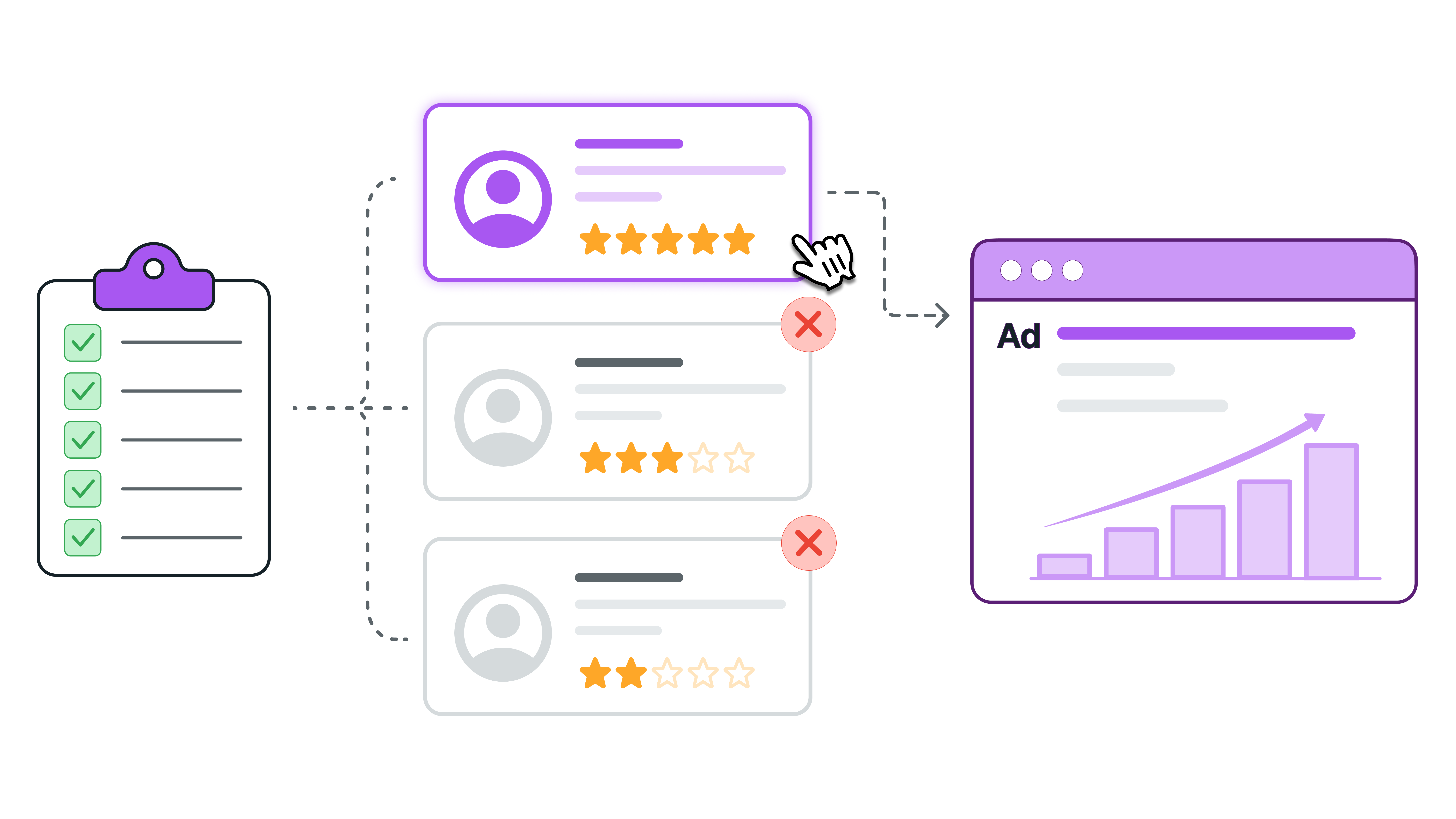
Ad copy is where most accounts lose the click before it happens. Generic headlines, weak CTAs, copy that lists features instead of outcomes. Every RSA I build follows a structured framework across seven angles:
- Problem-aware: speak to the pain the searcher is living with
- Solution-aware: position the product as the answer
- Competitor: win the comparison directly
- Social proof: numbers, customers, results
- Feature-led: capabilities that matter to the ICP
- Urgency/CTA: make the next step obvious
- Trust: security, compliance, enterprise-grade signals
There are certain standards that I hold every account to.
- These include at least 15 headlines and 4 descriptions per ad group, covering different messaging angles and user needs.
- Every claim is verified against the landing page to ensure accuracy. I don’t use fabricated stats, ever.
- Continuous testing is built into the process.
What role does the landing page play in account structure?
Sending traffic to a weak landing page is pouring water into a leaking bucket. You can raise the budget all you want, but if the page doesn't convert, nothing else matters.
CRO is one of the most underinvested areas in B2B SaaS marketing and one of the core pillars of how I structure accounts.
What I audit on every page:
- Message match. The page headline must mirror the ad that sent the visitor. If the ad promises "SOC 2 in 30 days," the page can't open with "Enterprise-grade compliance made simple."
- Above the fold. Headline, value prop, and CTA visible without scrolling on every device.
- Social proof. Logos, testimonials, G2 ratings. B2B buyers need to see companies like theirs already using the product.
- Form friction. Every unnecessary field costs conversions. Cut ruthlessly.
- Page speed. Under 2 seconds or I flag it for the dev team.
Testing runs continuously through Google Ads Experiments. I test one variable at a time, call winners only after reaching statistical significance, and then move on to the next test. The process never stops.
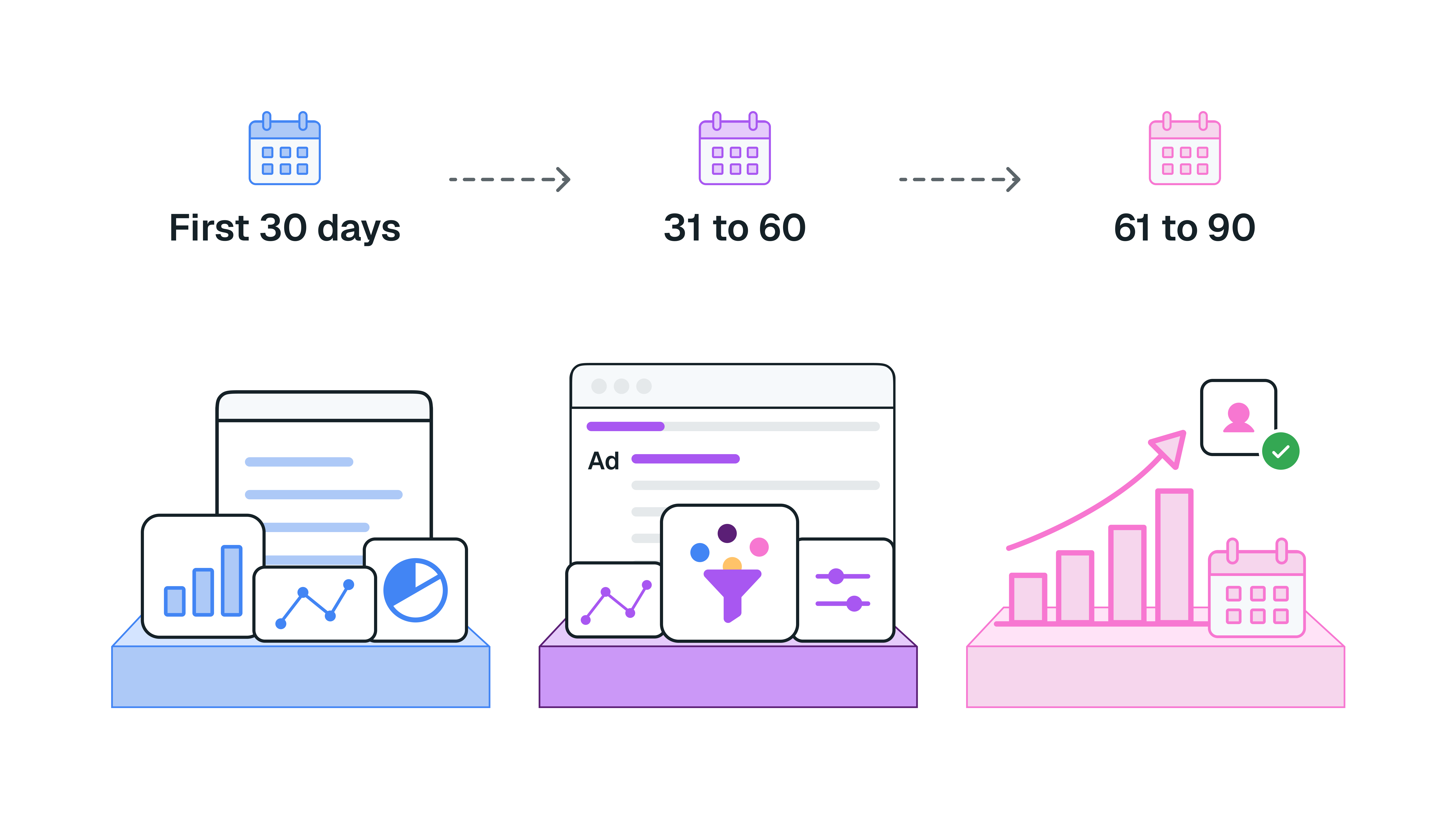
Does the 30/60/90 framework actually matter?
Yes, and every engagement I run uses it. The best B2B SaaS Google Ads campaigns look average at day 30 and exceptional at day 90. The difference is knowing exactly what to do and what to measure at each stage.
Days 1-30: Foundation & Data.
- Search terms reviewed daily
- Negative keywords added aggressively
- Irrelevant traffic removed quickly
- Conversion actions verified
- Ads checked to confirm they are eligible and serving
- A/B testing started on ad copy
- Winning search terms promoted to exact match
- CPA baseline established by day 30
Days 31-60: Optimization & Refinement.
- Device performance analyzed, and bid adjustments applied
- Audience and geo performance reviewed
- Budget shifted toward what converts
- Ad copy winners locked in, with new challengers introduced
- Landing page CVR baseline established
- tCPA introduced once 30+ conversions have accumulated
Days 61-90: Scale & Compound.
- tCPA tightened gradually using stable performance data
- Budget increased toward campaigns driving qualified pipeline
- Keyword expansion into adjacent intent areas
- Competitor campaigns refreshed and optimized
- Demand Gen and Performance Max evaluated for the next stage of scaling
- Full 90-day performance review completed
The rule that applies to all three phases: Any unexplained dip in impressions, clicks, conversions, or CVR is a red flag. So, it is important to investigate it before moving on.
Where does full-funnel thinking fit into account structure?
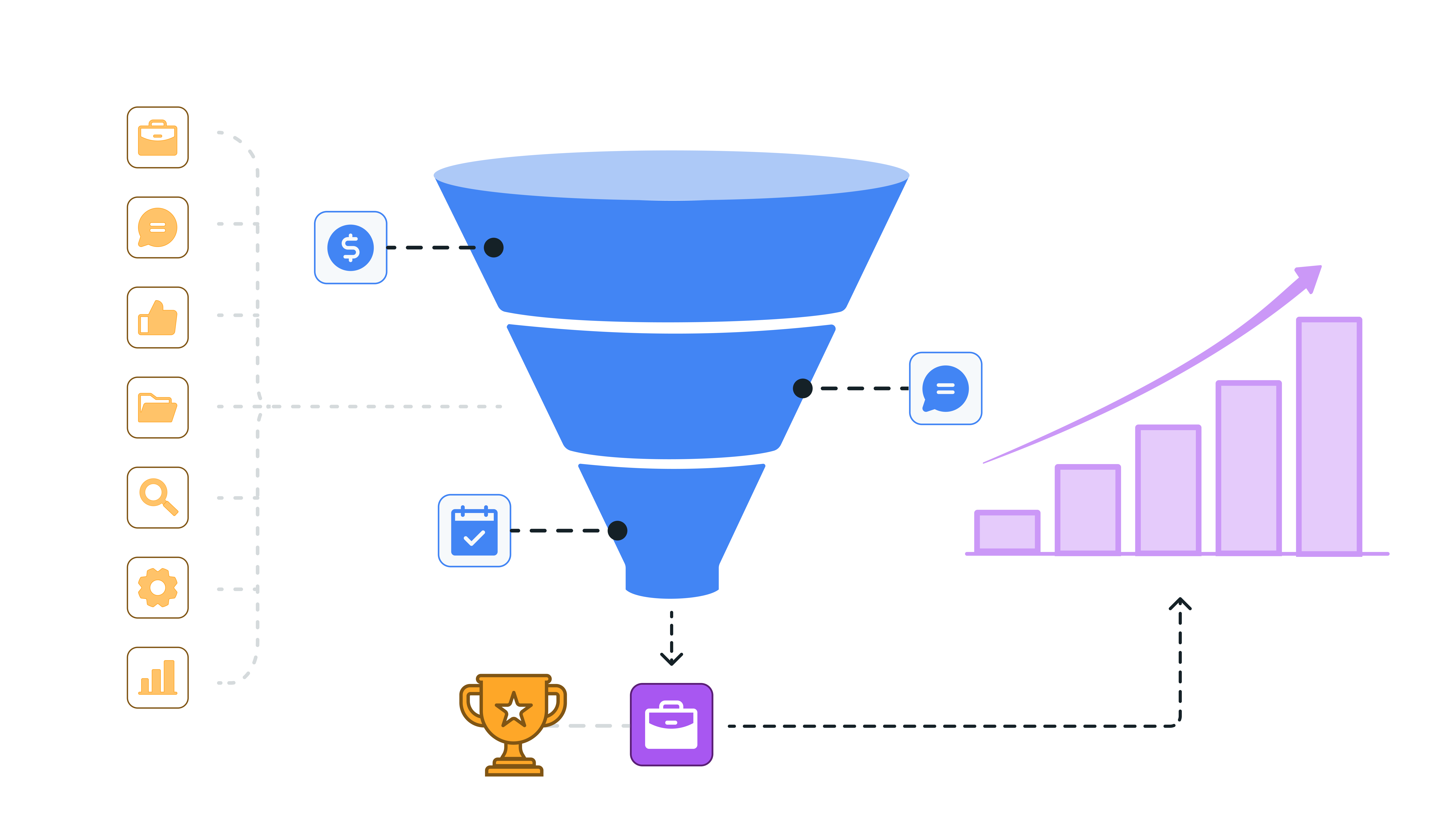
Search alone leaves a huge part of your market untouched. The buyers who don't know you yet are consuming content, watching YouTube, and forming vendor opinions long before they type a search. If your account only captures existing demand, you're competing with every other vendor in your category for the same limited pool of in-market searchers.
I build full-funnel Google Ads strategies that meet buyers at every stage:
- Upper funnel: Create demand via YouTube, Demand Gen, and Display. Speak to the problem, not the product. When they eventually search, they already know your name.
- Mid funnel: Capture consideration via non-brand Search, competitor campaigns, and retargeting. The buyer is comparing options. Your job is making sure you win that comparison.
- Lower funnel: Convert intent via brand Search, high-intent keywords, and demo/trial pages. Every dollar here generates pipeline directly.
The account is a diversified portfolio. Upper funnel feeds mid. Mid feeds lower. No campaign operates in isolation. Together they build a predictable, compounding revenue engine.
The biggest mistake I see in B2B SaaS is that they cut upper and mid-funnel spend the moment pipeline slows. Cutting demand creation today means the lower funnel dries up in 60-90 days.
Honestly, demand generation is the foundation behind every B2B SaaS strategy I build. I don’t focus on creating one successful month; I focus on building a pipeline engine that compounds over time. And that’s the approach that allows Scalix AI to stand apart as one of the leading SaaS marketing agencies.
What does this actually look like in practice?
Arini came to Scalix AI needing to build a Google Ads engine from scratch in one of the most unforgiving verticals in paid search. Within 90 days, we booked 90+ qualified demos, closed 17 signed clients directly attributable to paid search, and still had 29 additional pipeline leads actively converting. Demo volume grew every single month of the engagement:
- 20 in December
- 26 in January
- 26 in February
- 34 in March
A 70% increase from start to finish.
We didn’t see a one-time spike. It was a compounding account that improved every week because the structure was right from day one. Five campaign pillars, offline conversion tracking connected to their CRM before launch, tight ad group organization, purpose-built landing pages, and Smart Bidding progression handled by the book.
Google Ads is now Arini's most reliable pipeline channel, structured to keep compounding as their query discovery engine and buyer intelligence mature.
That's what happens when a B2B SaaS Google Ads account is structured correctly from the beginning. I don’t give my clients just one good month. I give them a compounding system.
What's the difference between account structure done right and done wrong?
[table]
Account structure done wrong | Account structure done right
One Search campaign for everything. Branded and non-branded keywords mixed. Target CPA set too early with no conversion data. Limited tracking that stops at form fills, no offline conversion tracking, and PMax cannibalizing branded search. CPA looks acceptable, but pipeline stays flat. | Five campaign pillars separated by intent. Smart Bidding progression based on conversion data. OCT connected to the CRM from day one. Continuous ad copy testing, optimized landing pages, and full-funnel coverage from YouTube to branded search.
Focuses on platform metrics instead of revenue outcomes. | Built to create compounding pipeline growth over time.
[/table]
The gap between the two isn't budget. It is, in fact, the execution. And execution comes down to knowing what to build, when to build it, and how to keep improving it.
Choose top Google Ads agencies in the US focused on compounding growth.
The $1M Google Ads Playbook — B2B SaaS Edition
Here is the complete framework I use to structure Google Ads accounts for B2B SaaS. Campaign architecture. Conversion tracking. Smart Bidding progression. RSA framework. The 30/60/90 rollout. RevOps integration. Everything I've learned in nine years inside Google and $1B+ in managed ad spend.
Download the Playbook →
The Bottom Line
A B2B SaaS Google Ads account done right compounds over time. Every month, the data gets sharper, the algorithm gets smarter, and the pipeline gets more predictable. Get the structure wrong, and you're perpetually resetting, perpetually learning, and perpetually explaining to your CFO why the numbers aren't moving.
The five pillars, conversion tracking framework, Smart Bidding progression, ad copy system, landing page discipline, and 30/60/90 rollout are not theoretical concepts. They are the exact systems I’ve used to build compounding Google Ads accounts for 50+ B2B SaaS companies.
If your Google Ads account is spending money and not building pipeline, the answer is the structure underneath. Let me fix it for you. Book a free 20-minute audit.