Your Google Ads producing leads but not pipeline?
Get a free audit from an ex-Googler who's fixed this exact problem.
Share this Article



Key takeaways
Optimize Google Ads for SQLs and pipeline, not cheap CPL metrics.
Google Ads captures demand; combine with LinkedIn and content for growth.
Structure campaigns by buyer intent and funnel stage, not keywords.
Feed CRM revenue data into Smart Bidding to improve lead quality.
Scale budgets only after proving conversion quality and pipeline contribution.
Most B2B Google Ads accounts I audit are not broken because of Google. They are broken because of the strategy running on top of it. Wrong metrics. Wrong campaign structure. Wrong definition of what success looks like.
The platform is fine. The thinking behind how it is being used is not.
I have spent nine years inside Google, managing over $1 billion in advertising revenue. I have since worked with B2B SaaS companies, AI-first startups, and high-growth teams building paid acquisition engines from scratch.
What I see consistently: companies optimizing their Google Ads for the wrong outcome, then blaming the channel when revenue does not follow.
This is not a guide on how to set up Google Ads. This is a breakdown of why your B2B Google Ads strategy is probably producing leads that go nowhere, and exactly how to fix it.
Why Most B2B Google Ads Campaigns Fail
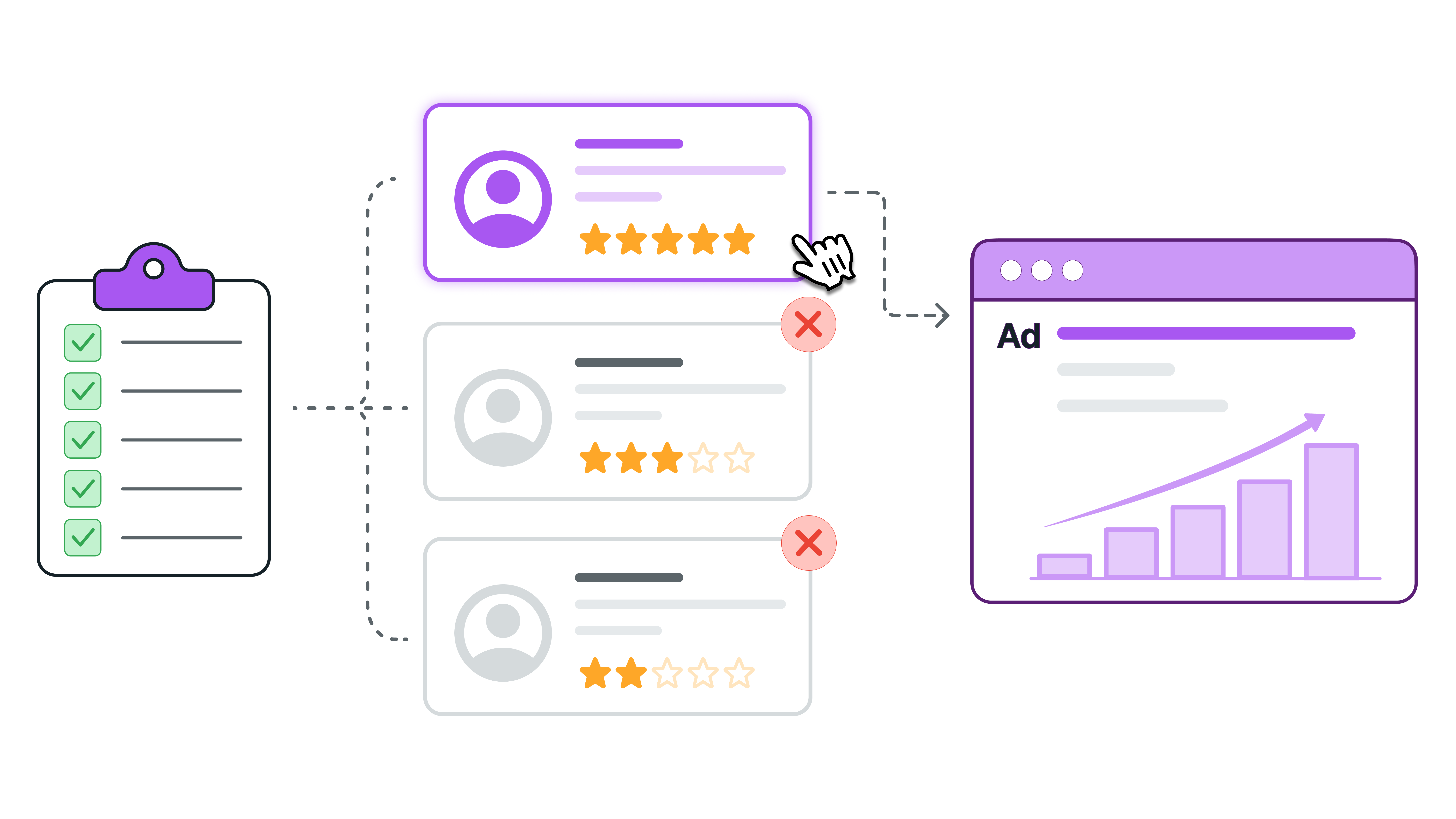
The most common failure mode in B2B Google Ads is optimizing for cheap leads instead of a qualified pipeline. A campaign generating 80 leads a month at $40 CPL looks great in a dashboard. It looks very different when sales tells you 75 of those leads are the wrong company size, wrong job title, or not ready to buy.
The root causes are almost always the same:
Vanity Metric Optimization.
CPC and lead volume are easy to report. Pipeline contribution and influenced revenue are harder to measure, so they get deprioritized. The algorithm then gets fed the wrong signal and doubles down on traffic that converts on paper but not in reality.
Sales And Marketing Misalignment.
Marketing closes the loop at form submission. Sales closes the loop at the signed contract. The gap between those two events — often 60 to 180 days in B2B — is where attribution breaks and blame accumulates.
Long Buying Cycles Not Reflected In Campaign Structure.
B2B buying groups spend only 17% of their total purchase journey meeting with potential vendors, according to Gartner. The rest is internal research, consensus building, and evaluation. A campaign optimized for first-click demos will miss the buyers who need four or five touchpoints before they are ready to talk.
The fix is not a new campaign type. It is a fundamentally different way of thinking about what Google Ads is supposed to do in your GTM system.
Demand Capture vs. Demand Creation: The Distinction That Changes Everything
Here is the most important framing shift for any B2B founder or SaaS marketer running paid search.
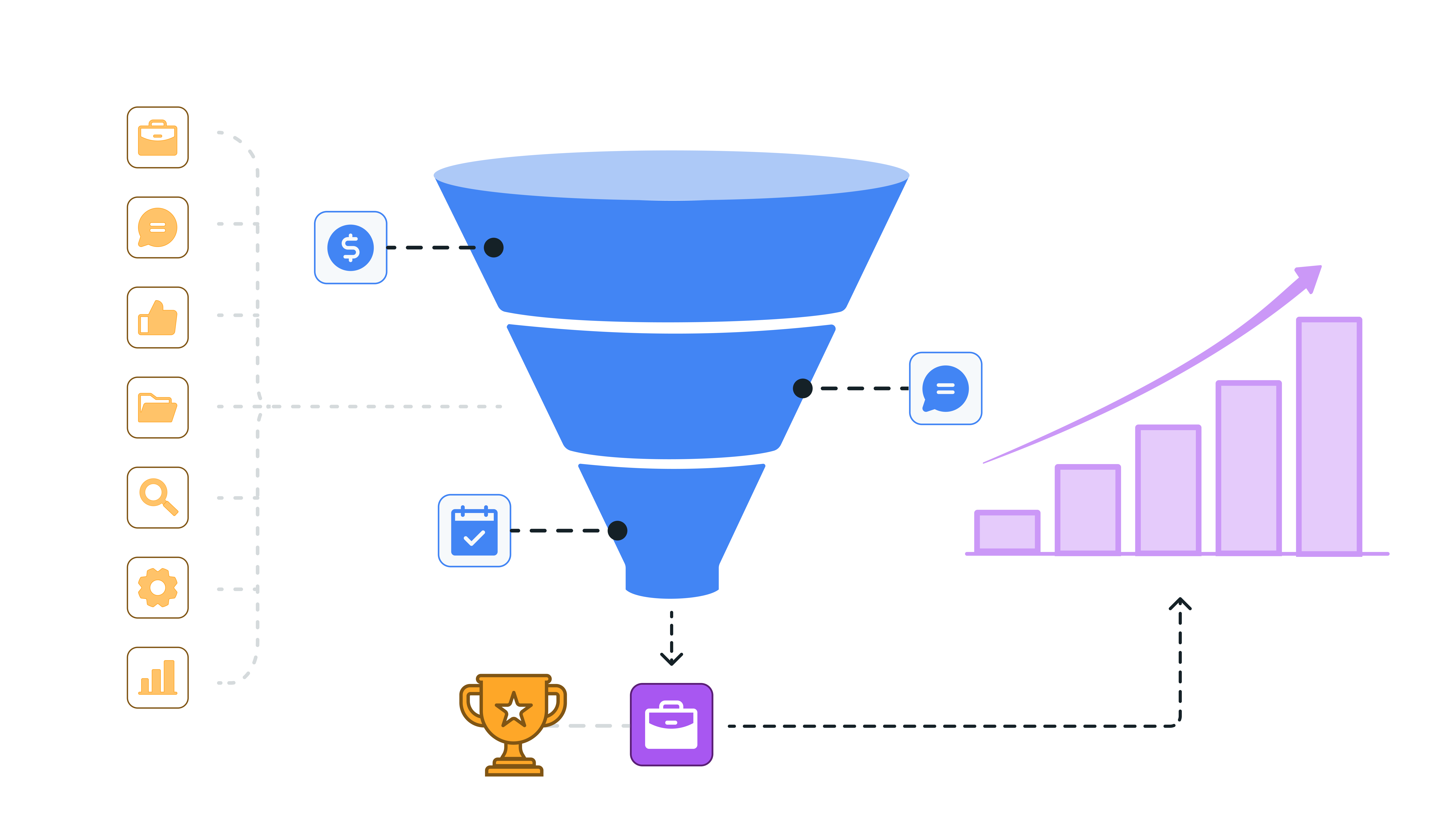
Google Ads is a demand capture channel. It finds buyers who already have a problem, already know they need a solution, and are actively searching for it. That is its strength and its limitation.
According to LinkedIn's B2B Institute 95-5 research, only 5% of B2B buyers are actively in-market at any given time. Google Ads can only reach that 5%. The other 95%, the buyers who will need your product in 6 to 18 months, are not searching yet. You cannot capture demand that does not exist.
This is why treating Google Ads as your only B2B growth channel is a strategic mistake. It is not designed to create demand. It is designed to capture it. For the demand creation side, the 95%, you need complementary channels like LinkedIn, content, community, and events.
Understanding demand generation vs. lead generation at a systems level is what separates companies that build compounding pipeline from those that stay stuck on the volume treadmill.
Google Ads works best as the conversion layer inside a larger GTM system. It captures the buyers your other channels have already warmed up, and it catches the buyers who arrive with intent you did not manufacture. Neither job makes it a full-funnel solution.
[table]
Channel Type | Primary Role | Audience | Timeline
Google Ads | Demand capture | Active buyers (5% in-market) | Immediate — captures existing intent
LinkedIn Ads | Demand creation | Future buyers (95% not yet searching) | 90–180 days — builds awareness and intent
Content / SEO | Demand education | Researchers at all stages | 6–18 months — organic compounding
[/table]
Ideal B2B Google Ads Account Structure
Most B2B Google Ads accounts are organized around keywords. They should be organized around intent.
The difference matters enormously. Keywords describe what someone typed. Intent describes where they are in the buying journey and what they need to see next.
Two people can type "compliance automation software" and have completely different intent. One could be writing a blog post, while the other could be evaluating vendors for a procurement decision next quarter.
A well-structured B2B Google Ads account for SaaS separates campaigns by funnel stage and intent signal, not just by keyword cluster:
[table]
Campaign Type | Keywords | Goal | Bid Strategy
High-intent / bottom funnel | Demo, pricing, software, buy, solution | Demo requests, trial signups | Target CPA toward SQL
Brand/competitor | Brand name, competitor comparisons | Protect and convert warm traffic | Target CPA, lower threshold
Category / problem-aware | Problem keywords, job-to-be-done queries | Education + top-of-funnel capture | Maximize conversions
Retargeting | Visitors who viewed pricing or demo pages | Re-engage high-intent visitors | Target CPA, separate budget
[/table]
Each campaign type needs its own landing page, its own bid strategy, and its own conversion goals. Mixing them into one campaign is one of the fastest ways to teach Google's algorithm to optimize for the wrong thing.
If you want to understand the mechanics of how the platform makes these decisions, my guide on how does Google Ads work for B2B SaaS walks through the auction, quality score, and algorithm logic that your structure has to work with.
Learn how to do PPC research for high-intent keywords ->
Conversion Tracking That Actually Reflects Revenue
This is the section most people skip. It is also where most B2B Google Ads strategies break.
If you are feeding Google's Smart Bidding algorithm form fills or page visits as conversions, you are asking it to optimize for activity, not revenue. The algorithm is powerful, but it is only as intelligent as the conversion signal you give it.
What you should be tracking, at minimum:
- SQLs, not MQLs. If sales qualifies the lead after marketing captures it, the SQL is the conversion that matters. Feed that signal back into Google Ads via CRM integration.
- Pipeline value by campaign. Which campaigns are contributing to your actual open pipeline? This is visible if your CRM captures UTM data at the lead level and you build a simple attribution dashboard.
- Closed-won revenue by source. This is the ultimate metric. It takes longer to populate, but once you have 60 to 90 days of data, it transforms how you allocate budget.
What you should stop tracking as primary conversions:
- Ebook downloads
- Page visits
- "Contact us" form fills without lead scoring
- Time on site

When I rebuilt PAM's Google Ads account, a voice-AI platform for car dealerships that had been run by an agency with broken attribution and no CRM linkage, the first thing I fixed was the tracking layer. No CRM integration, no feedback loop between ad clicks and qualified leads, no way for the algorithm to learn what a good lead looked like.
After rebuilding the full-funnel tracking and integrating the CRM, the account generated $234K in annual contract value on $72K in ad spend, a 3.25x return. The campaigns themselves were not dramatically different. The signal they were optimizing against was.
Landing Pages and CRO as Growth Levers
Most B2B SaaS companies underinvest in landing pages relative to ad spend. They spend $20K per month on clicks and send that traffic to a homepage or a generic "contact us" page. Then they wonder why conversion rates are 0.8%.
In B2B Google Ads, the landing page almost always matters more than the ad copy. Your ad gets someone to click. Your landing page gets them to convert. The ad is one moment. The landing page is the entire argument.
Three things that move the needle most on B2B landing pages:
Message match.
The keyword the visitor searched → the headline in the ad → the headline on the landing page should form one unbroken chain of relevance. If someone searches "compliance automation software" and lands on a page about enterprise security, you have already lost them.
Specificity over generality.
"We help companies stay compliant" loses to "SOC 2 in 14 days — automated evidence collection, continuous monitoring, no spreadsheets." The more specific the claim, the more credible it becomes.
Friction reduction.
Every field you add to a form reduces conversion. Every piece of social proof you add increases it. Test aggressively. The SaaS growth strategies that compound over time are built on incremental CRO wins, not one-time campaign launches.
For top-of-the-funnel marketing campaigns, the landing page can be softer. But for bottom-funnel demo campaigns, it should be laser-focused: one claim, one CTA, enough proof to justify the next step.
Here are the top landing page best practices you should be following ->
Creative Testing Framework
In B2B Google Ads, most teams treat creative as a one-time decision. Set the ads, run them for six months, look at CTR, and conclude the campaign is or is not working. That is not a testing framework. That is hoping something sticks.
A proper creative testing framework treats every campaign as an ongoing experiment:
- Test one variable at a time. Headline, description, CTA, value proposition. Not all at once. When you change multiple things simultaneously, you learn nothing about what moved the needle.
- Kill losers fast. Within two to four weeks, if an ad variant is statistically underperforming on CTR and conversion rate, pause it. Redirect the budget to the winner. Do not let poor-performing ads run for months because replacing them feels like extra work.
- Document what you learn. The insight from a failed test is as valuable as a winning test if you capture it. "Value-focused headlines outperform feature-focused ones for our ICP" is a strategic finding that improves every future campaign you run.
- Weekly review cycles. Not monthly. In B2B SaaS, where budgets run at $10K to $50K per month, waiting four weeks between optimizations means you have burned weeks of spend without course correction.
Budget Allocation and Scaling Strategy
The most expensive mistake in B2B Google Ads scaling is increasing the budget before improving conversion quality. Spending more on a broken acquisition model just breaks it faster.
My recommended approach:
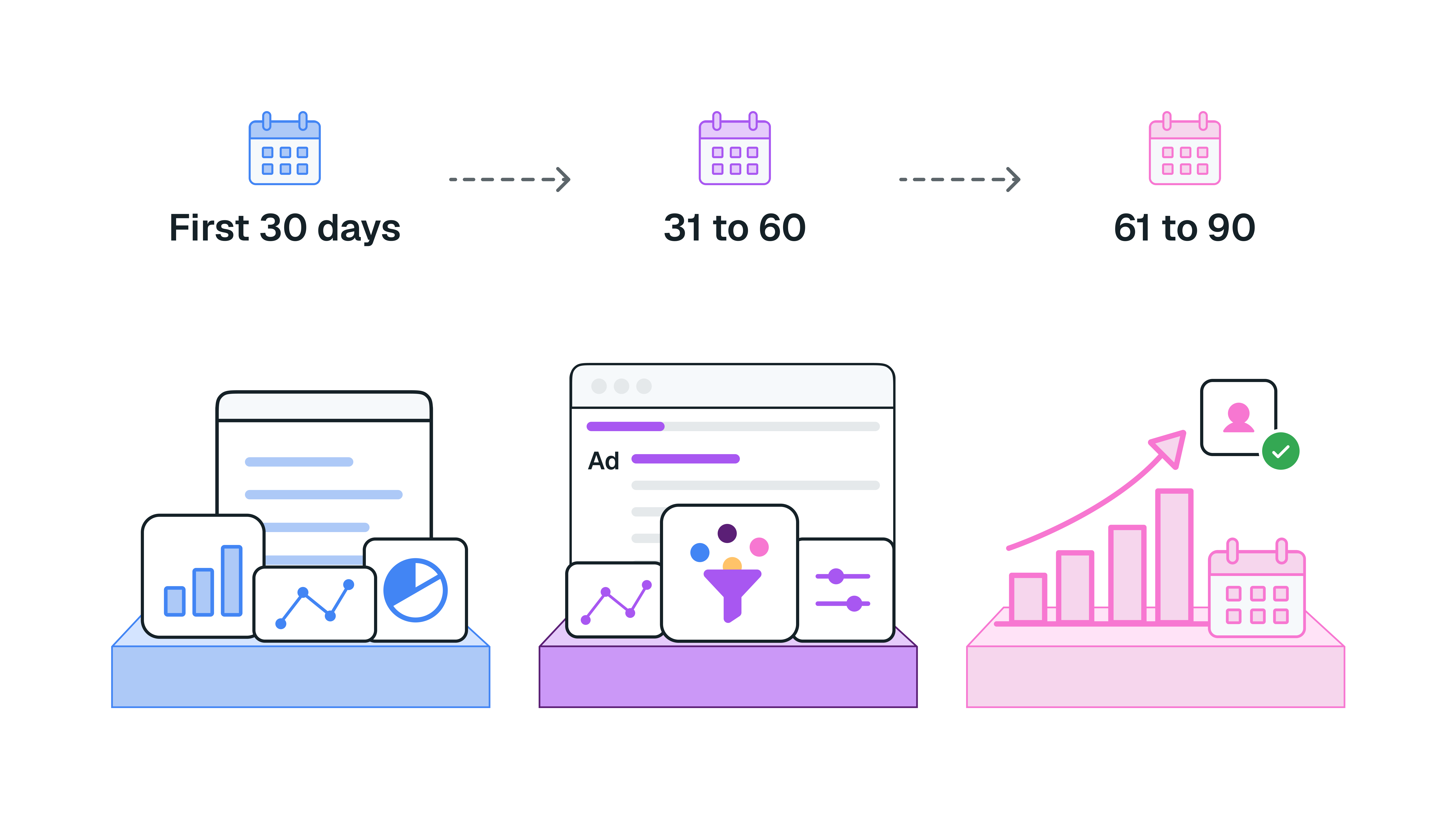
Phase 1 — Prove the model ($5K–$15K/month):
High-intent keywords only. Minimal campaign structure. Obsessive focus on tracking. Goal: establish a real CPL and cost-per-SQL baseline.
Phase 2 — Optimize the model ($15K–$40K/month):
Once you have 30 to 50 conversions with clean attribution, feed that data to Smart Bidding. Begin testing adjacent keywords and landing page variants. Goal: reduce CPL by 20–30% while maintaining SQL quality.
Phase 3 — Scale the model ($40K+/month):
Expand geo targeting, add competitor and category campaigns, and increase LinkedIn retargeting. Goal: grow pipeline volume while keeping LTV: CAC ratio healthy.
When Portless came to me with $9K in their first month, we did not try to scale immediately. We ran a lean, precision-targeted campaign focused entirely on decision-makers who understood high-ticket logistics.
Month 1: $9K spend, 7x ROI.
Month 2: $15K spend, 31x ROI.
Total across two months: 19x blended ROAS on $24K.
That result happened because we scaled ad spend only after the conversion quality was proven, not before.
For a step-by-step reference on what to check before you scale anything, my Google Ads optimization checklist covers the full review process.
Common B2B Google Ads Mistakes to Stop Making
[table]
Mistake | What It Looks Like | The Fix
Optimizing for CPL instead of SQL cost | Campaigns producing 100 leads; sales closing 2 | Rebuild conversion tracking around the qualified pipeline
Running Google Ads as a standalone channel | Pausing ads kills the entire pipeline | Build complementary demand creation (LinkedIn, content)
Broken tracking setup | No CRM linkage, UTMs not passing, form fills as primary conversions | Audit your full attribution chain before scaling spend
Ignoring lead quality feedback from sales | Marketing reports green, sales reports empty pipeline | Weekly SQL feedback loop between sales and paid media
Over-relying on automation without strategic input | Smart Bidding is optimizing toward the wrong conversion type | Feed high-quality signals. Automate execution, not strategy.
Scaling on lead volume, not lead quality | CPL drops, but revenue stays flat | Track pipeline contribution by campaign before increasing the budget
[/table]
If you want a structured process for diagnosing exactly which of these is happening in your account, my Google Ads audit for SaaS guide walks through the full diagnostic framework.
The Real B2B Google Ads Playbook
Let me say this plainly because most agencies will not. Google Ads alone is not a complete B2B growth strategy. It is one layer, a critical one, in a system that has to include:
- Paid media that captures intent where it exists
- Demand creation that builds intent where it does not
- Conversion tracking that reflects revenue, not activity
- Landing pages and CRO that convert the traffic your ads buy
- A sales and marketing feedback loop that keeps the algorithm pointed at real buyers
The companies I have worked with that consistently generate a strong pipeline from Google Ads are not the ones with the highest budgets. They are the ones who treat it as a system, not a campaign.

Delve, an AI compliance automation platform, generated $7M in influenced pipeline and $1.2M in closed-won revenue within six months by doing exactly this. Google Ads drove $5.59M of that pipeline with $1.04M in closed-won.
The campaigns were disciplined, the tracking was complete, and the feedback loop between paid media and sales was tight enough that the algorithm learned what a qualified enterprise buyer actually looked like. That commercial traction became part of the narrative that helped Delve close a $32M Series A led by Insight Partners.
That is what a well-executed B2B Google Ads strategy produces, not just leads, but compounding pipeline data that makes every subsequent dollar more efficient.
The Bottom Line
If you are looking for a deeper foundation on the channel itself, my guide on Google Ads for SaaS covers the SaaS-specific mechanics, and the Google Ads for Startups founder's guide is built specifically for early-stage companies building their first acquisition engine.
At ScalixAI, we work exclusively with B2B SaaS and AI-first companies to build Google Ads systems that drive a qualified pipeline. If your Google Ads account is producing clicks but not closing customers, the issue is almost certainly structural, not budgetary.