
Key takeaways
Google Search Ads for B2B SaaS capture buyers at the exact moment they're evaluating solutions.
Ad Rank is not the highest bid, but it's the best combination of bid, relevance, and landing page.
Google processes 8.5 billion searches daily; not showing up means your competitor captures that demand.
Advertisers only pay when someone clicks; intent-driven traffic is what makes the model work.
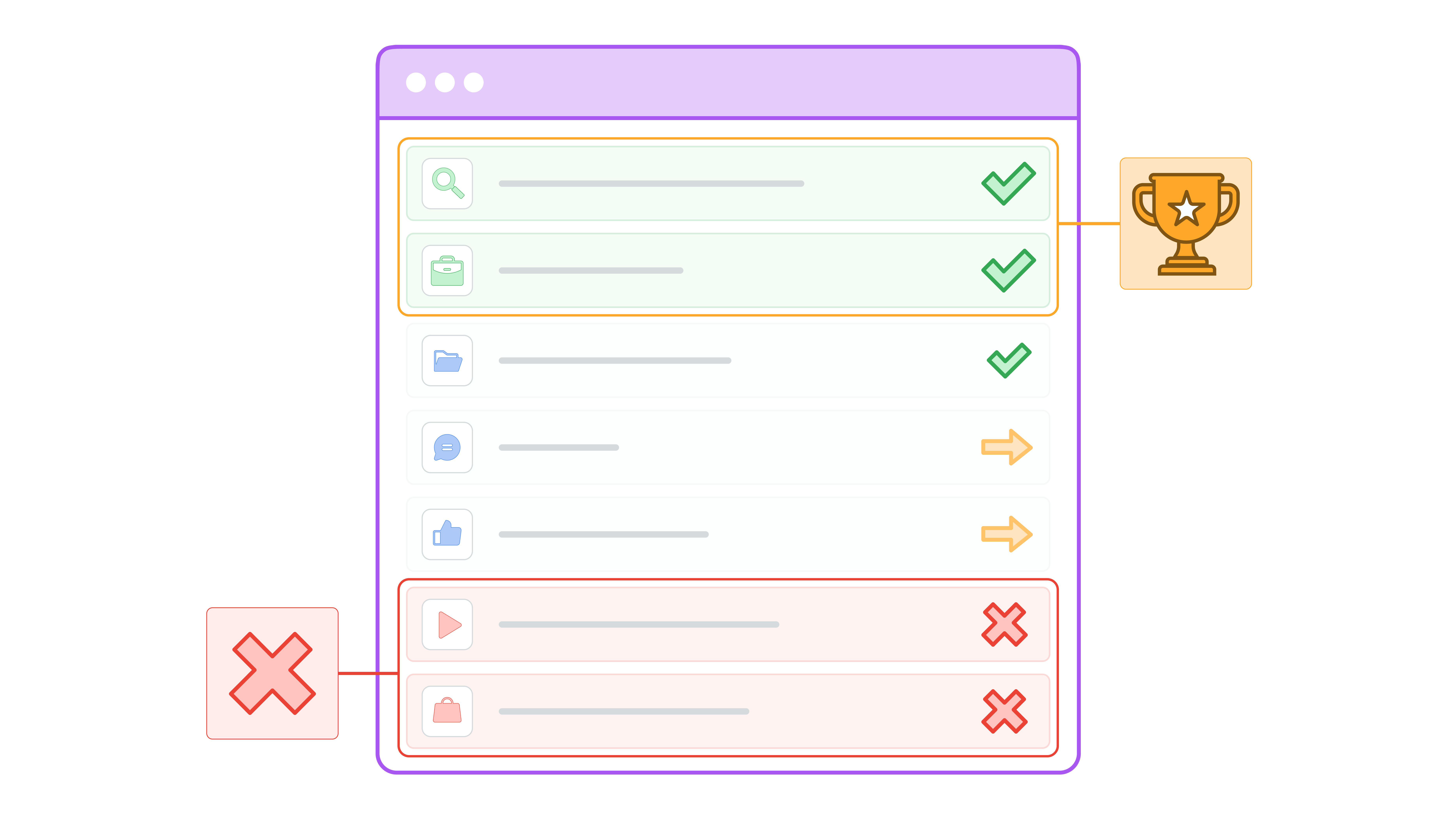
Top-of-page placement captures the majority of clicks; position matters as much as the ad itself.
A SaaS founder opens their Google Search ads dashboard for the first time and realizes something frustrating. People are already searching for the exact problem their product solves, but their company isn’t showing up anywhere in those results.
Instead, the top of the page is filled with competitors running Google Ads campaigns and capturing that demand.
This situation is more common than most teams realize.
Every day, Google processes over 8.5 billion searches, many from buyers researching software, comparing tools, or looking for solutions to a specific problem. If your company is not visible in those searches, those potential customers simply move on to the next option they see.
This is exactly where paid search changes the game. Instead of waiting months for organic traffic or hoping the right audience discovers your brand, a well-structured search campaign allows your business to appear when buyers are actively looking.
For B2B and SaaS companies, that moment matters. The difference between showing up in those searches and missing them entirely can determine whether your pipeline grows steadily or stays unpredictable.
Understanding how Google Search ads work, how Google Ads campaigns are structured, and how they capture high-intent traffic is the first step toward turning search into a reliable acquisition channel.
What Are Google Search Ads?
Google Search ads are text-based advertisements that appear on the search engine results page when someone searches for specific keywords.
These ads are part of the broader Google Ads platform, which allows businesses to promote their products or services across Google properties.
Let’s say, a B2B Saas company searches for keywords like SOC 2 compliance software or B2B email automation tool. Now, Google may display paid search ads for these keywords either above or below the organic results.
These ads are triggered by keywords within a search campaign inside a company’s Google Ads account.
Unlike traditional advertising, advertisers don’t pay for impressions. They only pay when someone clicks the ad. This is why Google Ads is often referred to as a pay-per-click (PPC) model.
For companies trying to reach high-intent buyers, this is incredibly valuable. You’re not interrupting people with ads, you’re basically responding to their search.
Where Google Search Ads Appear in Search Results
Most people recognize search ads immediately because they appear at the top of Google results with a small “Sponsored” label. Search ads typically appear in three main locations:
Top Of The Search Results Page
This is the most competitive placement. Ads here capture the majority of clicks because they appear before organic results.
Bottom Of The Search Results Page
These ads appear after the organic listings and still capture meaningful traffic.
Google Search Partners
In some cases, ads can appear on other sites that use Google’s search network.
For B2B SaaS companies, the top-of-page placements are often the most valuable because they capture buyers at the exact moment they’re researching solutions.
How Google Search Ads Work (Simplified)
At a high level, running Google Ads campaigns comes down to three core elements: the keywords you target, the ads you show to users, and the bids you set for those keywords. These elements work together to determine when your ads appear and who sees them.
However, the process is not as simple as selecting keywords and publishing ads. Behind the scenes, Google runs an auction every time someone performs a search to decide which ads appear and in what order.
Let’s break down how that works.
The Google Ads Auction
Every time a search happens, Google runs an auction between advertisers targeting that keyword. The platform evaluates the following:
- how relevant the ad is
- the advertiser’s bid
- the quality of the landing page
The combination of these factors determines which ads appear and in what order.
Ad Rank and Quality Score
Google doesn’t simply reward the highest bidder. Instead, it calculates something called Ad Rank, which includes:
- bid amount
- ad relevance
- landing page experience
- historical performance
This is where campaign setup & optimization become important. A well-structured campaign often beats a poorly built campaign with a higher budget.
Cost-Per-Click (CPC)
In most search campaigns, advertisers pay only when someone clicks on their ad. The cost of those clicks can vary widely depending on the level of competition and the industry. Some B2B SaaS keywords may cost just a few dollars per click, while highly competitive terms can exceed $50 or more.
However, the real question is not simply how much each click costs. What matters more is whether those clicks translate into qualified leads and a real pipeline for the business.
Types of Google Search Ads
Within a Google Ads account, advertisers can create several types of search ads. Each serves a different purpose depending on the campaign structure.
- Responsive Search Ads
These are the most common formats today. Advertisers provide multiple headlines and descriptions, and Google automatically tests combinations to find the best-performing variation. This format allows campaigns to adapt to different search queries.
- Dynamic Search Ads
Dynamic search ads automatically generate headlines based on website content. They’re useful for capturing long-tail searches when you don’t want to manually create hundreds of keywords.
- Call Ads
These ads encourage users to call a business directly from the search result. They’re typically used for service businesses but can occasionally work for high-value B2B sales conversations.
- Local Search Ads
Local ads appear when users search for businesses nearby. These are more common for location-based services but can support certain B2B categories.
Google Search Ads vs Other Google Ads Campaign Types
While Google Search ads capture buyers who are actively searching for a solution, many B2B and SaaS companies also run campaigns on other platforms to reach audiences earlier in their journey. Understanding the differences between these campaigns can help you see why search remains so powerful, and how other channels can complement it.
[table]
Campaign Type | Platform | Purpose | When to Use
Search campaigns | Google | Capture demand from people actively searching for a solution | When buyers have high intent and are close to making a decision
Display ads | Google | Build awareness across websites and apps | For introducing your brand or product to new audiences
YouTube ads | Google | Video advertising and brand exposure | For storytelling or reaching a broader audience with video content
Performance Max | Google | Automated campaigns across multiple placements | When you want Google to optimize across search, display, YouTube, and discovery
LinkedIn ads | LinkedIn | Target professionals based on company, role, and industry | Ideal for B2B SaaS campaigns aiming for decision-makers or enterprise buyers
Meta ads | Facebook/Instagram | Social media advertising for awareness and retargeting | When you want to build interest or re-engage previous website visitors
Remarketing campaigns | Google / Meta | Show ads to people who have already visited your website | To recapture interested prospects who didn’t convert initially
[/table]
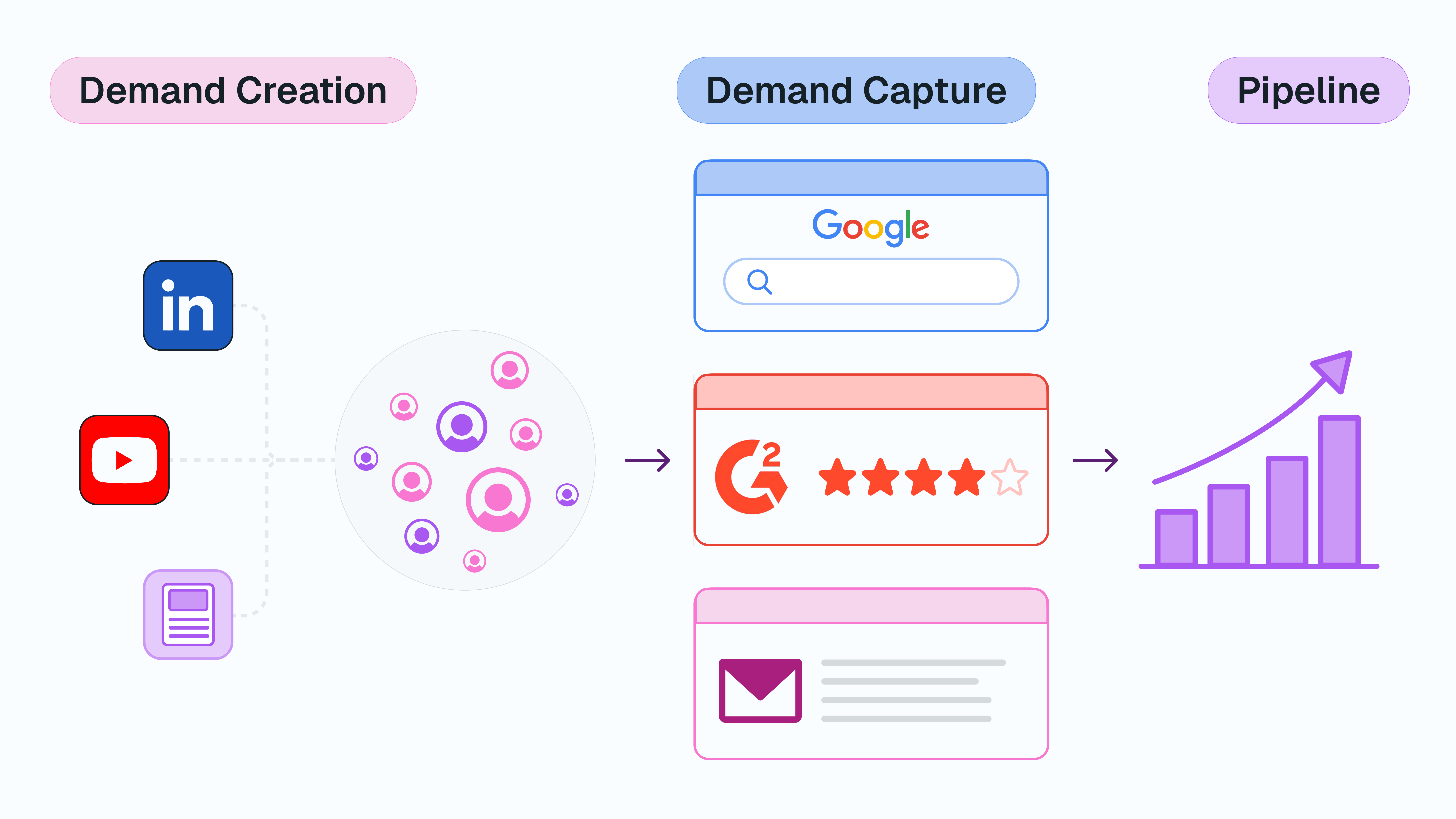
The main distinction between these campaigns is intent.
Search campaigns reach users at the moment they are actively looking for a solution, which often results in higher-quality leads and a shorter path to pipeline. Display, video, LinkedIn, and Meta campaigns generally target users earlier in their journey, serving as awareness or nurturing channels.
For B2B SaaS companies, this makes search ads a reliable engine for capturing high-intent traffic, while other campaigns can support brand awareness, retargeting, and top-of-funnel engagement.
When used together strategically, these channels complement each other without overlapping the tactical strategies already detailed in your existing blogs.
Why Google Search Ads Capture High-Intent Demand
Most marketing channels focus on generating awareness. But search ads focus on capturing demand.
Someone scrolling social media might not be thinking about software solutions. But someone searching for “AI compliance platform” is much closer to making a decision.
That difference in buyer intent is why search advertising often produces higher-quality leads.
At Scalix AI, we’ve repeatedly seen this across B2B companies.
For example, when working with the compliance platform Delve, a strategic rebuild of their Google Ads campaigns helped generate $1.2M in closed-won revenue and over $7M in the influence pipeline within six months.
The channel worked not because of more traffic but because it captured the right traffic.
When Businesses Should Use Google Search Ads
Search advertising works best when buyers are actively researching solutions. Here are some common scenarios where a search campaign can be particularly effective:
[table]
Scenario | How Search Ads Help
Launching a new product | A search campaign can quickly put a new offering in front of buyers who are already looking for solutions in your category.
Entering a competitive market | Paid search allows your company to appear alongside established competitors, ensuring visibility even in crowded markets.
Capturing competitor demand | Businesses can bid on competitor brand terms to intercept buyers evaluating alternatives and introduce your solution.
Generating B2B pipeline | For SaaS companies with high-value deals, even a handful of qualified leads can justify the entire campaign, making search ads highly efficient for pipeline growth.
[/table]
Industries That Benefit Most from Google Search Ads
While search ads work across many sectors, they are especially powerful in industries where buyers actively research before purchasing. Examples include:
- SaaS platforms
- compliance software
- logistics technology
- enterprise software
- professional services
For instance, in one Scalix AI engagement with Portless, the team focused their paid search strategy on highly specific buyer queries instead of broad lead generation. The result was 19X return on ad spend with only $24K in ad spend across two months.
The lesson is simple: Intent beats volume.
Example of a Google Search Ads Campaign Structure
Inside a Google Ads account, campaigns are typically organized in layers. A well-structured hierarchy makes campaign setup & optimization much easier as accounts grow. Here’s a simplified structure:
[table]
Layer | Purpose | Example
Campaign | Represents a high-level objective or category for your advertising | Compliance Software
Ad Groups | Groups of related keywords and ads within a campaign | SOC 2 automation, SOC 2 compliance tools
Keywords | Specific search queries you want to target | SOC 2 automation software, SOC 2 compliance platform
Ads | The actual text or copy that appears in search results | Headlines and descriptions tailored to the targeted keywords
[/table]
Google Search Ads Cost Explained
How much does it cost? This is one of the first questions businesses ask about Google Ads.
The answer depends on several factors:
- Keyword competition
- Industry
- Geographic targeting
- Ad relevance
- Landing page quality
In B2B SaaS, cost-per-click can vary dramatically.
Some keywords might cost $5–$10 per click, while competitive categories like cybersecurity or compliance software can exceed $50 per click.
But focusing only on CPC can be misleading. A campaign generating high-quality demos or enterprise deals can easily justify higher click costs.
Advantages of Google Search Ads Over Other Marketing Channels
Search advertising offers several unique advantages.
- Immediate Visibility: Unlike SEO, which can take months, Google Ads campaigns can start generating traffic quickly.
- Intent-Driven Traffic: Search users already have a problem they’re trying to solve.
- Measurable Performance: Every click, conversion, and lead can be tracked within a Google Ads account.
- Scalability: Campaigns can expand across new keywords, markets, and regions.
These factors make paid search one of the most controllable marketing channels for B2B companies.
3 Limitations of Google Search Ads
Despite its advantages, search advertising isn’t perfect.
- Limited demand: Search only captures existing demand. It doesn’t create it.
- Competitive costs: Highly competitive industries can see expensive CPCs.
- Requires strong campaign structure: Poor campaign setup & optimization can lead to wasted spend quickly.
This is why many companies struggle with search ads even after launching campaigns.
How SaaS and B2B Companies Use Google Search Ads to Generate Pipeline
For SaaS companies, the real goal of paid search isn’t clicks. It's a pipeline.
Effective B2B campaigns usually focus on:
- Demo requests
- Product trials
- Qualified sales conversations
Scalix AI helped a client restructure its SaaS Google Ads account around high-intent keywords and revenue attribution helped generate over $1M in closed-won revenue and $7M in attributed pipeline in under six months.
Instead of chasing traffic, the strategy focused on:
- Deal-stage keywords
- Clear campaign structure
- Revenue-focused measurement
That shift often transforms search ads from a cost center into a growth engine.
How a Google Ads Agency Helps Scale Search Campaigns
Many companies begin running ads internally. In the early stages, launching a search campaign inside a Google Ads account may seem relatively straightforward. You select a few keywords, write ad copy, and start driving traffic.
However, as budgets grow and campaigns expand, things quickly become more complex. Multiple Google Ads campaigns, overlapping keywords, attribution challenges, and bidding strategies can make it difficult to maintain efficiency.
Campaign structure, keyword intent, attribution models, and continuous campaign setup & optimization all play a role in determining whether paid search becomes a profitable channel or an expensive experiment.
This is why many B2B companies eventually work with specialists who focus exclusively on paid search.
- Agencies with deep experience in SaaS acquisition help businesses:
- Structure campaigns around revenue rather than just clicks
- Improve keyword targeting based on buyer intent
- Connect advertising performance to pipeline and deal metrics
- Scale campaigns without sacrificing efficiency
For companies looking to turn Google Ads campaigns into a predictable acquisition engine, working with a specialized team can make a meaningful difference.
Scalix AI focuses specifically on Google Ads management for B2B SaaS companies, helping teams transform search advertising into a consistent pipeline channel.
If you're exploring ways to scale your search campaigns, working with specialists who provide Google Ads services for SaaS can help ensure your campaigns are structured for long-term growth rather than short-term experimentation.
Conclusion
Google Search ads are powerful not simply because they drive traffic, but because they capture intent. When someone searches for a solution, they are already closer to making a decision than someone casually browsing social media or reading industry news.
For SaaS and B2B companies, this makes paid search one of the most reliable ways to reach buyers at the exact moment they are evaluating solutions. With the right campaign structure, thoughtful PPC keyword targeting, and ongoing optimization, Google Ads campaigns can evolve from simple traffic drivers into a predictable source of qualified pipeline.
However, building campaigns that consistently generate revenue requires more than launching ads. It requires clear strategy, strong account structure, and continuous optimization inside your Google Ads account.
If you're looking to turn Google Search ads into a scalable growth channel, Scalix AI specializes in helping B2B SaaS companies build high-performing search campaigns.
Book a free audit and see how Scalix AI can help you.