


Find Out Which Platforms Actually Fit Your Funnel Stage
Share this Article



Key takeaways
The best PPC platforms in 2026 are the ones that match your buyer's intent and funnel stage.
Google Ads averages $4.51–$5.26 CPC. Microsoft Advertising delivers similar intent at 30–60% less.
98% of PPC marketers use Google Ads, but being everywhere is not the winning strategy.
LinkedIn's B2B targeting layered into Microsoft Ads is one of the most underused combinations available.
PPC visitors are 50% more likely to purchase than organic visitors when campaigns are structured correctly.
Choosing the best PPC platforms in 2026 matters more than ever, with global ad spend projected to exceed $1 trillion, making platform selection a direct driver of ROI.
If you're looking to scale revenue efficiently, choosing the right PPC (pay-per-click) advertising platform can make the difference between wasted spend and predictable, profitable customer acquisition.
At ScalixAI, we've managed millions in paid media, and the lesson is simple: growth doesn’t come from being everywhere, it comes from focusing on platforms that drive conversions, lower CAC, and real pipeline impact.
In this guide, we’ve listed the best PPC platforms in 2026. We’ll draw a cross-platform advertising pricing comparison, talk about the PPC platforms people are using besides Google, and the best PPC platforms for ROI.
Let’s get started.
What is a PPC Platform?
A PPC (pay-per-click) platform is an advertising system where businesses pay each time a user clicks on their ad. These platforms allow you to bid on keywords, audiences, or placements to drive targeted traffic, leads, or sales.
For B2B SaaS, PPC platforms are primarily used to capture demand (search) or generate demand (social), depending on where your buyers are in the funnel.
Learn how to do PPC keyword research for your B2B SaaS business →
Types of PPC Platforms
Primarily, there are 5 types of PPC platforms in 2026.
- Search Advertising Platforms: These platforms show ads based on user intent through keyword searches (e.g., Google Ads, Microsoft Ads). They are best for capturing high-intent, bottom-funnel demand.
- Social Media Advertising Platforms: These platforms target users based on demographics, behavior, and interests (e.g., LinkedIn, Facebook, Instagram). They are typically used for awareness and demand generation.
- Display & Programmatic Advertising Platforms: These platforms place visual ads across websites and apps using automated bidding (e.g., Google Display Network). They are useful for retargeting and brand visibility.
- Video Advertising Platforms: These platforms deliver ads within video content (e.g., YouTube). They help build awareness and engagement, especially for complex products.
- Native Advertising Platforms: These platforms blend ads into editorial content (e.g., Taboola, Outbrain). They are used for content-driven traffic and top-of-funnel marketing.
Understanding the PPC Platform Ecosystem
Before diving into specific platforms, it's important to understand that the best PPC advertising platforms aren't always the largest. They're the ones that align with your customer journey, buying intent, and conversion economics.
Some businesses generate their highest-quality leads through Google Search, while others see stronger ROAS through LinkedIn's B2B targeting or community-driven platforms like Reddit.
The key is matching your business model, audience, and funnel stage with the platform's strengths. A B2B SaaS company targeting enterprise decision-makers will require a completely different channel mix than an e-commerce brand optimizing for volume purchases.
That's why we've outlined each platform's performance advantage, so you can make a more informed, ROI-driven decision.
A Quick Glance At the Best PPC Platforms
According to Statistica, 98% of PPC marketers use Google Ads as their primary platform, followed by Facebook (76%) and Instagram (70%), demonstrating the dominant role these platforms play in modern digital advertising strategies.
The landscape continues to evolve rapidly, with global digital ad spend expected to exceed $700 billion in 2026, making platform selection more critical than ever for maximizing ROI.
[table]
Platform | Best For | Funnel Stage | Strength | When to Use It
Google Ads | High-intent lead generation | BOFU | Captures active search demand | When users are already searching
LinkedIn | B2B targeting & enterprise leads | MOFU | Precise professional targeting | When targeting specific job roles
Meta (Facebook/IG) | Scalable paid acquisition | TOFU | Strong audience targeting | When you need volume and testing
YouTube | Video awareness & education | TOFU | High engagement | When explaining complex products
Microsoft Ads | Search with lower competition | BOFU | Lower CPC than Google | When scaling search efficiently
TikTok | Demand generation & discovery | TOFU | High reach, low CPM | When targeting younger audiences
X (Twitter) | Real-time engagement | TOFU | Trend-based visibility | When leveraging timely conversations
Reddit | Niche communities | TOFU | High trust in communities | When targeting specific user groups
Quora | Intent-based content discovery | MOFU | Question-driven targeting | When users are researching solutions
[/table]
The 10 Best PPC Platforms
Here are the 10 best PPC platforms in 2026.
- Google Ads
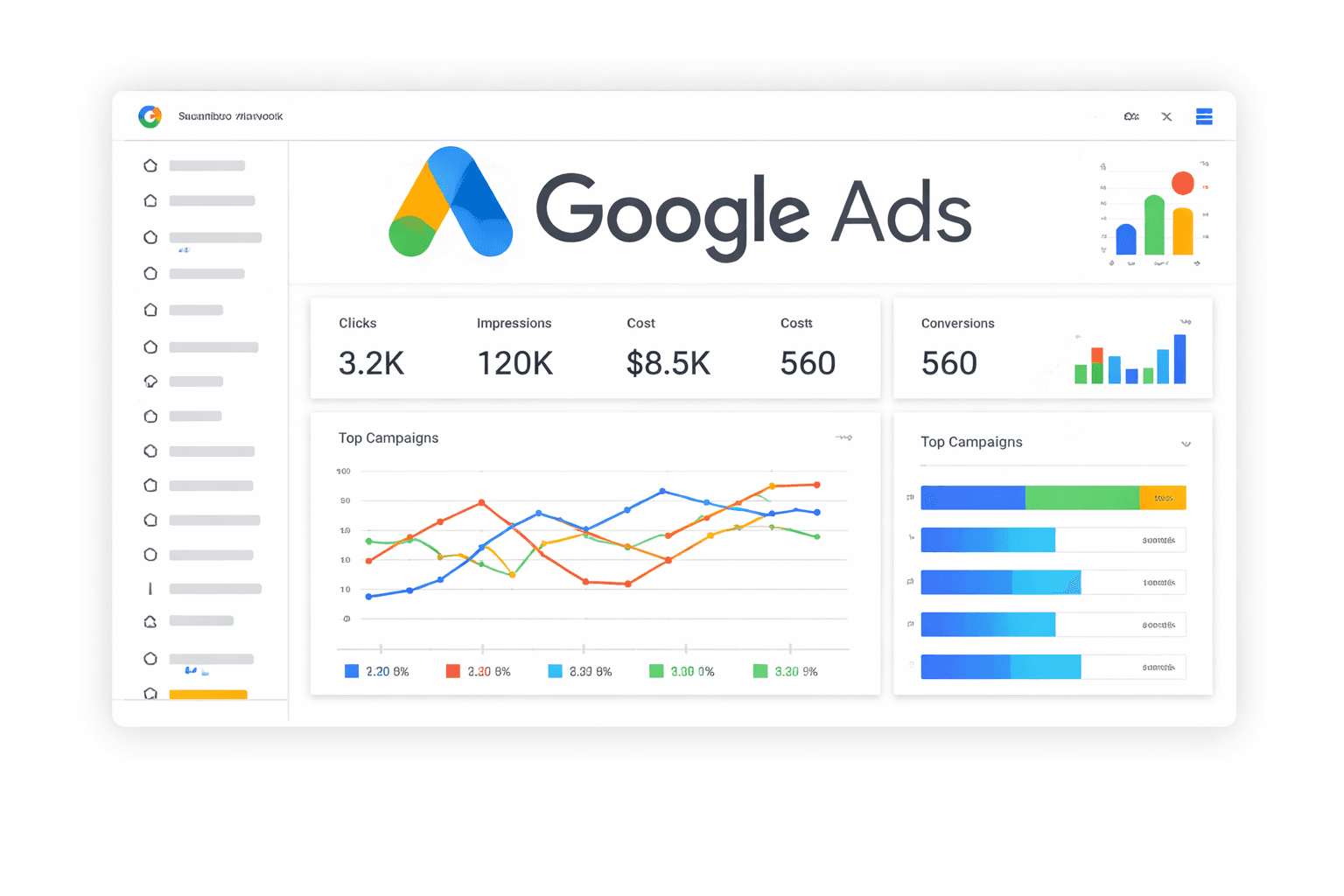
Google Ads remains the most powerful PPC platform processing over 16.4 billion searches per day, highlighting the scale of high-intent demand captured through search platforms. This makes it one of the strongest channels for conversion-driven acquisition.
Google's advantage lies in scale and full-funnel reach. Beyond Search, advertisers can access YouTube, Display, Gmail, and Shopping placements, allowing campaigns to support awareness, consideration, and purchase simultaneously.
Automation has also advanced significantly. Smart Bidding strategies like Target CPA and Target ROAS optimize bids using real-time signals, often improving conversion efficiency compared to manual bidding. Performance Max campaigns further streamline cross-channel execution by allocating spend toward the highest-performing placements automatically.
From a cost standpoint, Google operates on an auction model. Average search CPCs typically range from $4 to $5 across industries, while highly competitive verticals like legal and insurance can exceed $50 per click.
At Scalix, well-optimized search campaigns often deliver conversion rates between 3% and 8%, with top-performing accounts exceeding 10%.
Google Search Ads requires strong campaign structure, keyword strategy, and continuous optimization, but when executed correctly, it remains one of the most profitable paid acquisition engines available.
See how ScalixAI increased 20x revenue with its partnership with Fyxer →
- Microsoft

Microsoft Advertising is frequently overlooked, but it can deliver meaningful incremental conversions at a lower CPC than Google.
Bing reaches over 500 million monthly users globally and holds around 11–12% of the U.S. desktop search market.
Microsoft's audience also skews older, higher-income, and more professionally established, which can be valuable for certain B2B and high-ticket markets.
One of Microsoft Advertising's strongest differentiators is LinkedIn profile targeting. Advertisers can layer job title, industry, and company targeting directly into search campaigns, improving lead quality for B2B SaaS and services.
For advertisers already running Google Ads, Microsoft offers seamless campaign imports, making it one of the easiest platforms to expand reach while improving blended ROAS. .
- Meta

Meta's ad ecosystem remains the largest social PPC network, with over 3 billion monthly active users across Facebook and Instagram. These platforms excel at demand generation, reaching potential buyers before they actively search.
Unlike Google, Meta campaigns are interruption-based, meaning creative and positioning drive performance. Scroll-stopping ad formats, strong offers, and iterative testing are essential for maintaining CTR and reducing CPA.
Meta's targeting capabilities remain among the most advanced, allowing segmentation by demographics, interests, behaviors, and lookalike audiences. This makes it especially effective for scaling top-of-funnel acquisition and retargeting.
For Facebook, average CPCs typically range from $0.50 to $1.67, making Meta one of the most cost-efficient platforms for reach. Traffic campaigns average around $0.50 CPC, while website lead generation campaigns run $2.50-$3.00 per click. In the US market specifically, CPCs climbed 19% to $1.67 in 2025, though Europe saw costs decrease, making it the most cost-efficient developed market.
Instagram CPCs are higher than Facebook, averaging $3.35 for Feed ads and $1.83 for Stories, reflecting a more engaged but premium audience. Video-first formats consistently outperform static creative, often delivering 2x to 3x higher engagement and stronger conversion lift. Reels ads command 20-25% higher CPMs than static Feed ads but deliver stronger engagement rates.
The key challenge is creative fatigue. Sustained performance requires ongoing creative refresh and a testing mindset. CPMs on Meta platforms averaged $19.81 globally in 2025, with significant seasonal variation—peaking at $25.22 in November before resetting to $15.74 in January 2026.
Confused whether to choose Google Ads or Meta? Discover your best option here →
- LinkedIn Ads

For B2B SaaS and high-value services, LinkedIn remains the most precise paid channel for reaching decision-makers.
While CPCs are higher, often ranging from $5.59 to $10 (with SaaS and Healthcare regularly exceeding $7 per click while Finance and Education land in the $3-$5 range), LinkedIn's targeting depth is unmatched. Advertisers can reach buyers by job title, seniority, company size, industry, and account lists.
LinkedIn's professional context also improves lead quality. Users are in a business mindset, which increases engagement with thought leadership, webinars, and product education.
High-performing formats include Lead Gen Forms, which reduce friction and improve conversion rates, and Sponsored Content optimized for pipeline influence rather than clicks alone.
All the best LinkedIn Ads Agencies know that success on the platform comes from value-first messaging, not aggressive selling. Educational content and credibility outperform product-first ads consistently. It's average CTR typically ranges from 0.3% to 0.6%, reflecting the platform’s professional audience and lower click behavior compared to search and social platforms.
- YouTube Ads

YouTube combines massive reach with video-driven engagement, making it one of the strongest platforms for scalable awareness and mid-funnel conversion support.
With over 2.5 billion monthly active users, YouTube enables brands to educate, build trust, and retarget users with sequential messaging.
Advertisers only pay when a user watches at least 30 seconds or engages, keeping CPVs extremely efficient, often between $0.01 and $0.05.
The most successful YouTube ads win in the first five seconds. Strong hooks, curiosity-driven storytelling, and native platform tone are essential for improving view-through rate and downstream conversion lift.
YouTube is particularly effective when paired with Google Search for full-funnel acquisition and improved blended ROAS.
- TikTok Ads
TikTok has become a major performance channel for brands targeting Gen Z and younger Millennials, with over 1.5 billion monthly active users.
TikTok's algorithm rewards engaging creative over brand size, allowing even smaller advertisers to achieve significant reach and efficient CPCs, typically between $0.50 and $1.50.
The key is authenticity. High-performing TikTok ads look like organic content, not polished commercials. User-generated content styles consistently outperform traditional creative.
For consumer brands, TikTok can unlock outsized ROAS when paired with strong creative testing and rapid iteration.
- Twitter (X) Ads
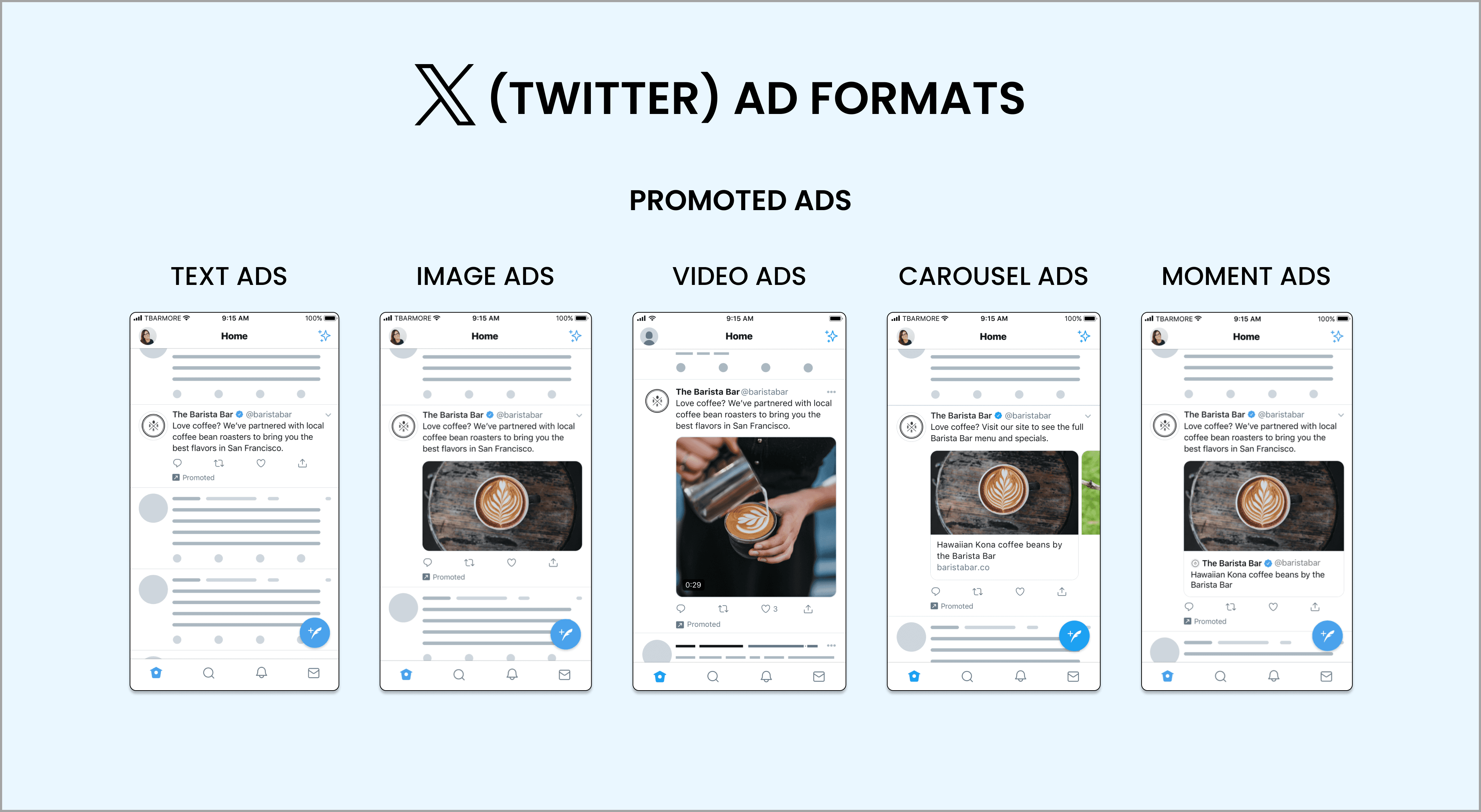
X remains a niche but valuable platform for brands that benefit from real-time conversation, trending topics, and cultural relevance.
With approximately 600 million monthly users, X performs best for timely campaigns focused on engagement, traffic, and awareness.
X Ads operate on an auction model, with costs varying based on targeting and competition. Promoted Tweets integrate directly into user feeds, driving engagement through native placements.
However, brand safety concerns remain, so advertisers should evaluate carefully based on audience fit and risk tolerance.
- Reddit Ads
Reddit offers access to highly engaged niche communities, making it a powerful channel for products that solve specific problems or resonate with passionate audiences.
Reddit can be cost-effective, though CPCs vary based on audience targeting and competition. Success depends heavily on aligning messaging with community expectations.
Brands that provide value, education, or authentic participation outperform traditional sales-driven ads.
Reddit is particularly effective for tech, gaming, productivity tools, and niche consumer categories.
- Quora Ads

Quora reaches over 300+ million monthly visitors seeking answers, creating high-intent opportunities for education-based marketing.
It performs well for B2B SaaS and high-consideration products where buyers require research before converting.
CPCs typically range from $2 to $5, offering a mid-range option between Meta efficiency and LinkedIn lead quality.
Quora Lead Gen Forms work especially well because users are already in an information-seeking mindset.
Table for Cross-Channel Advertising Platform Pricing Comparison 2026
[table]
Platform | Avg CPC (2026) | Cost Level | Notes
Google Ads | $4 – $6+ | High | Expensive, but the highest intent and conversion potential
LinkedIn Ads | $6 – $12+ | Very High | Premium B2B targeting, higher CPL, but better lead quality
Meta | $1 – $3 | Low–Medium | Cheaper clicks, lower intent
YouTube | $0.10 – $0.30 (CPV) | Low | Awareness-focused, not direct conversions
Microsoft Ads | $3 – $5 | Medium | Lower CPC than Google, similar intent
TikTok | $0.50 – $2 | Low | Cheap reach, weak B2B conversion
X (Twitter) | $0.50 – $2 | Low | Engagement-based, inconsistent ROI
Reddit | $0.50 – $3 | Low–Medium | Niche targeting depends heavily on audience fit
Quora | $1 – $3 | Medium | Strong for research-stage users
[/table]
Spy on your competitors using these tools and review their PPC strategies!
Top Paid Search Advertising Platforms For Performance-Driven Campaigns (PPC Platforms Besides Google)
If it’s not Google, it’s LinkedIn, especially for B2B SaaS, where targeting matters more than volume.
- LinkedIn Ads: Best for reaching decision-makers directly (job title, company, seniority)
- Microsoft Ads: Same intent as Google, lower competition and CPC
- Quora Ads: Only works when users are actively researching solutions
Scalix AI helped Delve build a combined Google + LinkedIn paid acquisition engine. It is amongst our high-performance-driven campaigns that generated a $7M+ pipeline and $1.2M closed-won revenue in 6 months.
Breakdown:
- Google Ads → $5.59M pipeline, $1.04M closed
- LinkedIn → $1.35M pipeline, $169K closed
What it showed us is that Google captures demand. LinkedIn helps create and target it, especially for enterprise buyers.
Which PPC Platform For ROI?
Google Ads is the best PPC platform for ROI. It consistently delivers the highest ROI because it captures existing demand. People are already searching, which means higher conversion rates and a faster pipeline.
LinkedIn comes second for B2B. It offers better targeting, but higher cost and slower conversion.
How to Choose the Best PPC Platform for B2B SaaS
- Start with buyer intent: If people are actively searching, prioritize search platforms
- Focus on pipeline and revenue, not clicks or impressions
- Align the platform with the funnel stage. Use Search for conversions and social for demand generation.
- Evaluate CAC vs deal size. Higher CPC is acceptable if it drives qualified revenue
- Avoid spreading the budget too early. Initially, just focus on 1–2 platforms and scale what works.
- Choose platforms based on targeting needs. Use LinkedIn when precision matters
- Use performance data to guide expansion. Only add channels when they improve pipeline.
Discover the top PPC competitor research tools →
The Bottom Line
When evaluating the best PPC platforms in 2026, the decision ultimately comes down to how well each platform aligns with your buyer’s intent and conversion potential.
Whether you choose Google's intent capture, LinkedIn's B2B precision, or TikTok's creative scale, success comes from aligning the right offer with the right audience and optimizing relentlessly toward conversions.
At Scalix AI, we specialize in Google Ads for B2B SaaS because that’s where the highest-intent revenue comes from. With over 9 years of hands-on platform experience, Waqas understands how Google actually works: from auction dynamics to keyword strategy to scaling pipeline, not just traffic.
Instead of guessing, we build structured, conversion-focused systems that turn search demand into a predictable pipeline and revenue.
Book a free audit to get your 30-60-90 day plan, one that will generate a pipeline of your dreams.


